
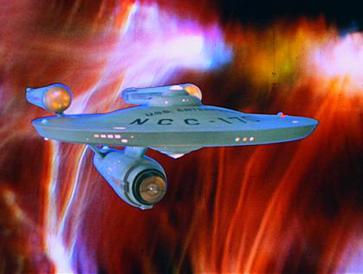
On September 8, 1966, American television audiences were introduced to a new kind of adventure with the premiere of Star Trek on NBC. Although its original run lasted only three seasons, the show would go on to become one of the most influential and enduring franchises in entertainment history.
A Bold New Vision
The brainchild of writer and producer Gene Roddenberry, Star Trek was pitched as a “Wagon Train to the Stars”—a space western where each episode offered a self-contained journey into the unknown. The series followed the voyages of the starship USS Enterprise (NCC-1701), commanded by Captain James T. Kirk (William Shatner), alongside First Officer Spock (Leonard Nimoy) and Chief Medical Officer Dr. Leonard “Bones” McCoy (DeForest Kelley).
The show’s iconic opening monologue stated its mission: “to explore strange new worlds, to seek out new life and new civilizations, to go where no one has gone before boldly.” This spirit of exploration embodied the optimism of the 1960s space race and also served as a platform for social commentary.
Breaking Television Barriers
Star Trek was revolutionary in its casting and storytelling. It featured one of the first multiracial ensembles on American television, with Nichelle Nichols as Lieutenant Nyota Uhura, George Takei as Lieutenant Sulu, and, later, Walter Koenig as Pavel Chekov. The show pushed boundaries further in 1968 with one of TV’s first interracial kisses between Nichols and Shatner—an act that sparked both praise and controversy.
Roddenberry used science fiction as a way to bypass television censors. By setting stories on distant planets, the show tackled issues such as war, racism, gender roles, and human rights under the guise of futuristic adventure. Episodes often mirrored debates over the Vietnam War, civil rights, and Cold War tensions, giving Star Trek a depth uncommon in primetime entertainment.
Initial Struggles
Despite its ambition, Star Trek struggled in the ratings. Its first regular episode, The Man Trap, aired on September 8, 1966, as part of NBC’s fall preview. Reviews were mixed: some critics praised the imagination, while others dismissed it as confusing or overcomplicated. Ratings declined during its run, and after 79 episodes, NBC canceled the series in 1969.
Yet cancellation was not the end. In syndication during the 1970s, Star Trek established a passionate fan base, earning the title of “cult classic” and inspiring fan conventions, fanzines, and a distinct identity for its loyal followers: Trekkies.
A Lasting Legacy
From its modest beginnings, Star Trek has grown into one of the most successful media franchises of all time.