
For over a century, fall football games have been a beloved pastime in American culture. One of the most notable players on the field is the quarterback. This player receives the play call, directs the offensive strategy, and advances the ball down the field. It is thrilling to watch the quarterback hand off the ball to an agile running back, run the ball himself while darting through the defensive line, or throw a completed pass downfield to a receiver. However, it might surprise you to learn that passing the ball wasn’t always a legal move for quarterbacks. On September 5, 1906, American football was changed forever when a quarterback from St. Louis University completed the first legal forward pass in a game.
History of American Football
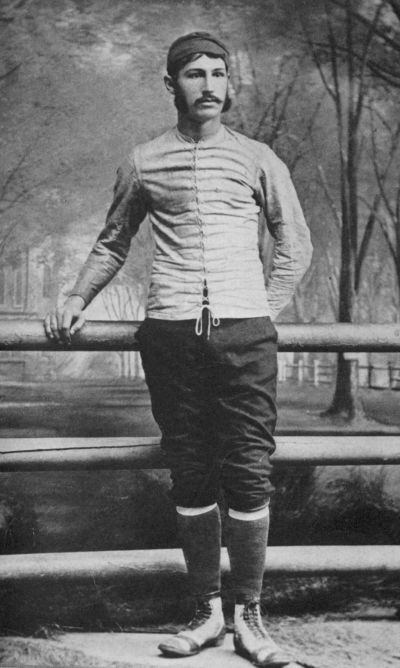
American football began in late 1869, but it was quite different from the game we know today. Forward passing was not a part of the game at that time. The style of play bore more resemblance to rugby than modern football. The ball would be advanced primarily by the quarterback handing it off to a running back. Teams also employed a strategy known as a “mass play,” where players would work together to create a path for the quarterback or running back to run through.
This style of play led to many injuries and fatalities. Mass plays depended on brute strength and collective momentum to advance the ball. Players lacked the level of protective equipment that is standard today. Additionally, there was little strategic decision-making involved in the play calls.
But all that changed in 1906.
The Forward-Passing Game
In early 1906, John Heisman, who was the football coach at Georgia Tech, began promoting a new play known as the “forward pass.” He advocated for this change because of the brutality of mass plays in the sport and the high number of injuries suffered by players. While many schools in the Eastern United States rejected the idea, it received considerable support from other universities.
St. Louis University coach Eddie Cochems recognized the potential of the new play call and began implementing the forward pass in his practices, perfecting its execution. During the opening game of the 1906 season, St. Louis University’s quarterback, Bradbury Robinson, completed the first successful forward pass for a 20-yard touchdown.
The St. Louis University team achieved an undefeated 11-0 season, with a total score of 401-11 against their opponents. Coach Eddie Cochems became known as the “Father of the Forward Pass.”
Impact Today
After the success that Cochems and his team achieved in the 1906 season, other teams started to experiment with the new play option, leading to their own successes. Today, the forward-passing game is a critical component of American football, making the game much more strategic, exciting, and significantly less brutal.