
In 1954, the United States Supreme Court issued a landmark decision in the case of Brown v. Board of Education, ruling that segregation in schools was unconstitutional because it violated the Equal Protection Clause of the 14th Amendment. Although this ruling officially outlawed segregation in educational institutions, the implementation was slow, and many schools continued to resist the change.
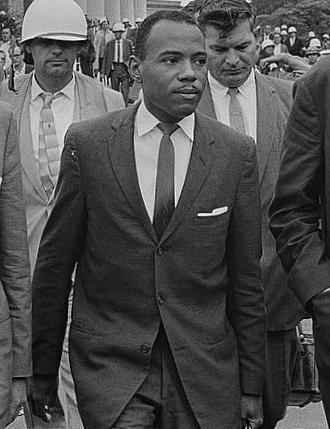
In 1961, seven years after the official ruling that outlawed segregation in public schools, a young man named James Meredith applied to the University of Mississippi, which was still an all-white institution at the time. Meredith aimed to challenge the segregation laws and exercise his constitutional right to attend a public university. Although the school initially accepted his application, they later rejected him upon discovering he was black. However, on September 30, 1962, after a year-long legal battle, James Meredith, accompanied by United States Marshals, officially became the first black student to enroll at the University of Mississippi.
A Violent Response
James Meredith’s arrival on campus sparked a violent reaction. As he lined up to register for classes, a crowd of hundreds of armed civilians gathered to intimidate him and to uphold the segregation of their school. By 7 p.m. that evening, the situation had escalated into a riot. The crowd grew to over 2500 individuals, who began throwing bottles and rocks, burning cars, looting, and shouting obscenities. In an effort to restore order, marshals deployed tear gas against the rioters. Hundreds were injured during the chaos, and the riot ultimately resulted in two deaths.
Military Intervention
President John F. Kennedy was forced to address the dangerous situation at the University of Mississippi. He issued an executive order to utilize federal resources to prevent the unlawful obstruction of James Meredith’s enrollment at the University of Mississippi. To manage the crisis, he dispatched the U.S. Border Patrol, the Army Military Police, and members of the U.S. Army, totaling nearly 30,000 soldiers, to assist in the situation. The deployment of this large number of federal troops successfully quelled the violent uprising at the university and facilitated James Meredith’s enrollment. Federal troops and marshals were also assigned to accompany Meredith to his classes and provide him with constant protection until his graduation.
Lasting Impact
James Meredith’s enrollment at the University of Mississippi was a significant victory for the Civil Rights Movement and the fight against segregation. His successful admission marked the first time an African American was able to enroll in and attend a previously all-white university. Meredith’s perseverance and courage served as a powerful example for those combating white supremacy.
Furthermore, the Ole Miss riot underscored the need for the federal government to intervene and enforce civil rights more forcefully, while also demonstrating its commitment to protecting those rights.