
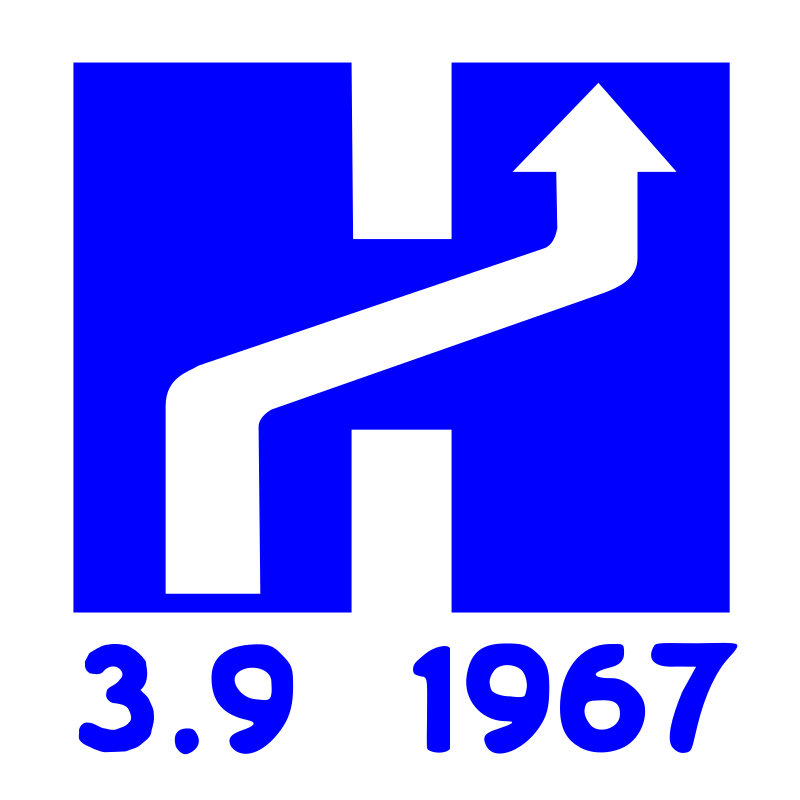
On September 3, 1967, Sweden underwent one of the most significant traffic changes in history. This day is known as Dagen H, or “H Day,” where “H” stands for Högertrafik, meaning right-hand traffic. The switch from driving on the left-hand side of the road to the right may seem straightforward, but it required years of preparation, a comprehensive public awareness campaign, and extensive logistical planning.
Why the Change Was Needed
Sweden was an anomaly in mainland Europe during that time. While most neighboring countries, such as Norway and Finland, drove on the right side of the road, Sweden maintained a left-side orientation. This situation presented several challenges for cross-border travel, with millions of vehicles moving between Sweden and its neighbors each year. Furthermore, over 90% of Swedish drivers used left-hand-drive cars, which are designed for right-hand traffic. This discrepancy made overtaking on narrow roads dangerous and contributed to frequent head-on collisions. Although a 1955 referendum showed that 83% of Swedes opposed the switch, Parliament proceeded with the change in 1963 due to rising car ownership and growing concerns about traffic safety.
Preparing for Dagen H
The Swedish Commission for the Introduction of Right-Hand Driving (HTK) spent four years preparing the country for the switch to right-hand driving. Psychologists advised on how to condition drivers for the transition, while schools, media outlets, and advertising campaigns bombarded citizens with reminders. The government even issued gloves, stickers, and everyday items featuring the “H” logo to keep the change front of mind.
In the run-up to Dagen H, workers painted an extra set of traffic lines and installed thousands of new road signs—about 350,000 nationwide, including 20,000 in Stockholm alone. Television programs and popular songs, including the catchy “Håll dig till höger, Svensson” (“Keep to the right, Svensson”), reinforced the message.
The Big Switch
At 4:50 a.m. on September 3, all traffic in Sweden came to a halt. Drivers carefully shifted to the right-hand side of the road and waited until 5:00 a.m., when police signaled that vehicles could resume movement. In major cities like Stockholm and Malmö, the changeover had begun earlier to allow crews to reconfigure intersections.
Public transport required special attention.
Around 8,000 buses had to be retrofitted with doors on both sides, while more than 1,000 new buses with right-hand doors were purchased for the country. Some cities, like Gothenburg and Malmö, scrapped their tram networks altogether, replacing them with buses to avoid costly reconfigurations to the changing automotive updates.
Immediate Results
The transition went remarkably smoothly. On Dagen H itself, only 157 minor accidents were reported, resulting in 32 injuries and no fatalities. Experts attributed the small number of accidents in the grand scheme of things to both better visibility when overtaking in left-hand-drive cars and heightened driver caution. However, within a few years, accident rates returned to pre-1967 levels. Today, Dagen H is remembered as both a symbol of Sweden’s adaptability and a reminder of the complexity behind seemingly simple changes.