
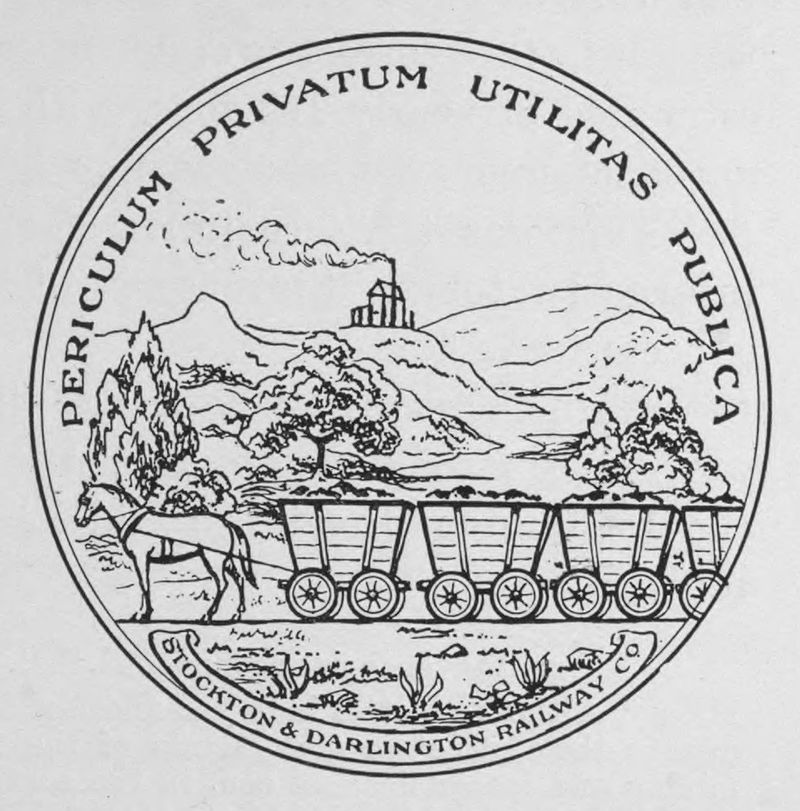
On this day in 1825, a loud, smoke-belching machine roared to life in northeastern England, changing human mobility forever. George Stephenson’s Locomotion No. 1 made its inaugural public run on the newly constructed Stockton and Darlington Railway. It carried not only freight but also paying passengers, marking the first time in history that people traveled together on a steam-powered train. This event marked the beginning of the modern railway age.
A World First on Iron Rails
- The locomotive was initially named Active before being renamed Locomotion No. 1.
- George Stephenson and his son Robert built it at Robert Stephenson and Company.
- On September 27, it carried more than 400 passengers over an 8.7-mile route.
- The top speed? A blistering 15 miles per hour—twice the speed of a horse-drawn coach.
This wasn’t a demonstration or a novelty act. It was a real, working transport line. Passengers climbed into a coach called Experiment and into open wagons. Coal filled other cars. Business and leisure shared the track for the first time. George Stephenson himself drove the train. Crowds lined the route. People marveled. Some feared it. Others cheered.
Built to Move the World
The locomotive’s design wasn’t flashy by today’s standards. Two vertical cylinders powered its iron wheels. It ran on coke, not coal, and the boiler pushed steam at 50 psi. But Stephenson’s genius lay in function, not frills. One key innovation: Locomotion No. 1 utilized coupling rods to link its driving wheels, reducing slippage and enhancing reliability. It was rugged, efficient, and revolutionary.
Not Just About Trains
This one train did more than move passengers; it reshaped economies. Towns and cities suddenly needed rails, stations, and steel. Goods moved faster. People traveled farther. Time, once dictated by the sun and foot, now ticked to the rhythm of timetables.
The railways played a crucial role in driving the Industrial Revolution forward. And they began here, with Locomotion No. 1.
The Road After the Rails
Locomotion continued working the Stockton and Darlington line until 1850. After a boiler explosion in 1828 killed its driver, it was rebuilt and kept in service. Later, it was retired and preserved. It’s been displayed across the world, celebrated in parades, and enshrined in railway museums.