
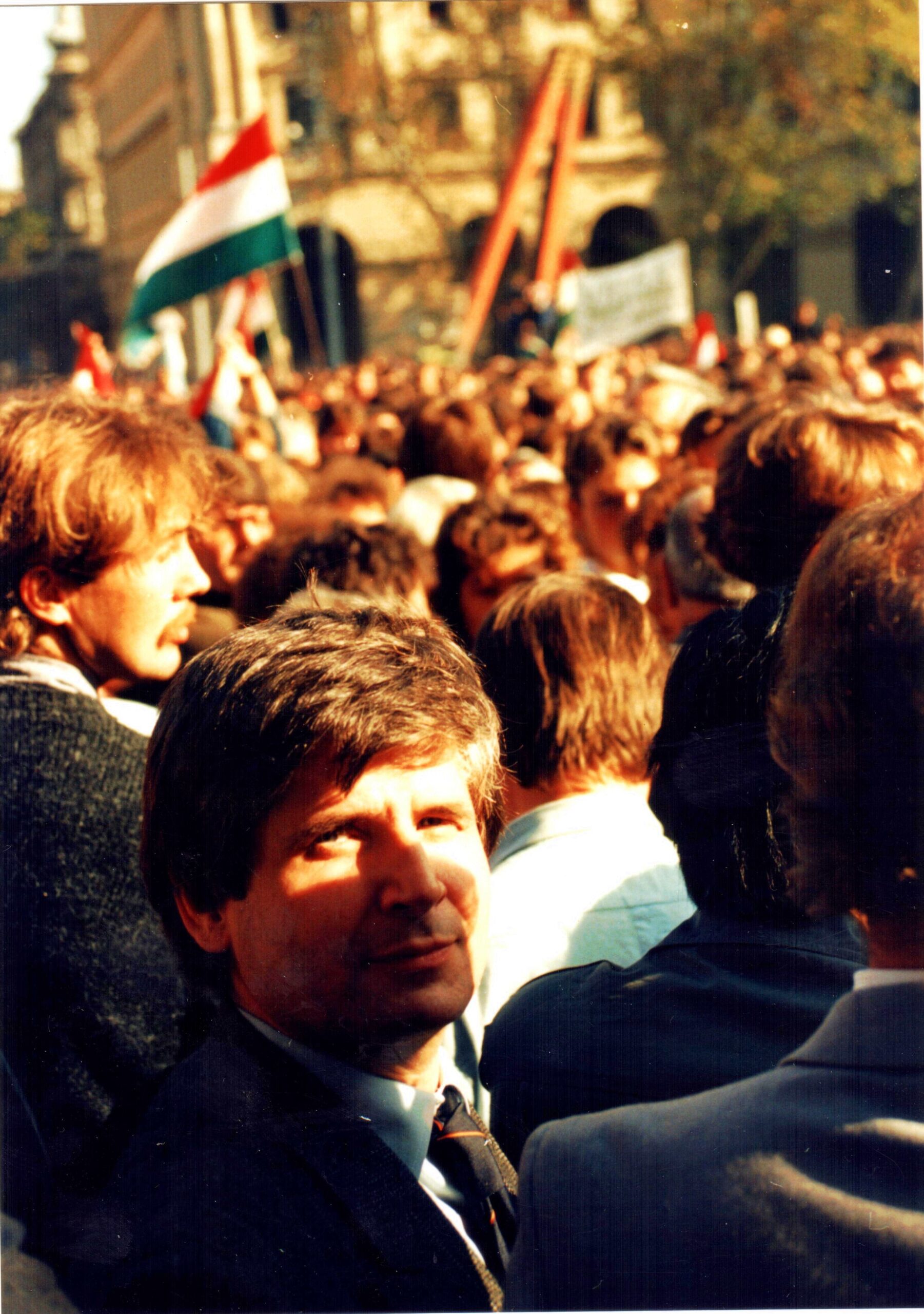
Hungary officially declared an end to its four decades of communist rule on October 23, 1989. The country took a stance, proclaiming itself a republic and ushering in a new era of democracy. This momentous day in history marked a critical turning point not only for Hungary but also for the broader Eastern Bloc, as it became one of the first Soviet-aligned nations to dismantle its one-party communist system.
The Official Declaration
Acting President Mátyás Szűrös declared this decision from the balcony of the Hungarian Parliament in Budapest, before a massive and emotionally charged crowd.
Szűrös said: “I solemnly declare that as of today, October 23, 1989, Hungary is a republic and its name is the Republic of Hungary.” The symbolism of the date was profound, as it marked the 33rd anniversary of the 1956 Hungarian Uprising, a failed but significant pro-democracy revolt against Soviet domination.
Many in the crowd waved Hungarian flags with the Soviet-era emblem cut out, mirroring the iconic imagery from the 1956 revolution. It was a visible, powerful repudiation of communist rule and a reaffirmation of Hungary’s long-standing desire for independence and democratic governance.
The peaceful nature of Hungary’s transition was notable. Unlike the bloodshed of 1956, the events of 1989 unfolded without violence. Prime Minister Miklós Németh stressed that this peaceful change was the result of political courage and national unity. “Our struggle can be fulfilled without bloodshed, not like 33 years ago,” he stated in a televised address.
The Aftermath
Hungary’s declaration came after months of political reform. The Hungarian Parliament had recently passed a new constitution, which helped pave the way for a multi-party democracy. Plans were already in motion for free elections, the first since 1947, signaling a dramatic shift in the nation’s political landscape. The formation of opposition groups, such as the Hungarian Democratic Forum and the Alliance of Free Democrats, further underscored the country’s move toward pluralism and open political competition.
The announcement also sent ripples through the rest of Eastern Europe. Hungary’s bold stance ultimately inspired democratic movements across the region, particularly in neighboring countries such as Poland, East Germany, and Czechoslovakia. It demonstrated that peaceful transitions away from authoritarianism were possible, despite the shadow of the Soviet Union.
Hungary had not only turned a page in its own history but had helped ignite the broader collapse of communism in Europe. October 23, 1989, remains a national holiday in Hungary, commemorating freedom, resilience, and the nation’s long struggle to reclaim its democratic identity.