
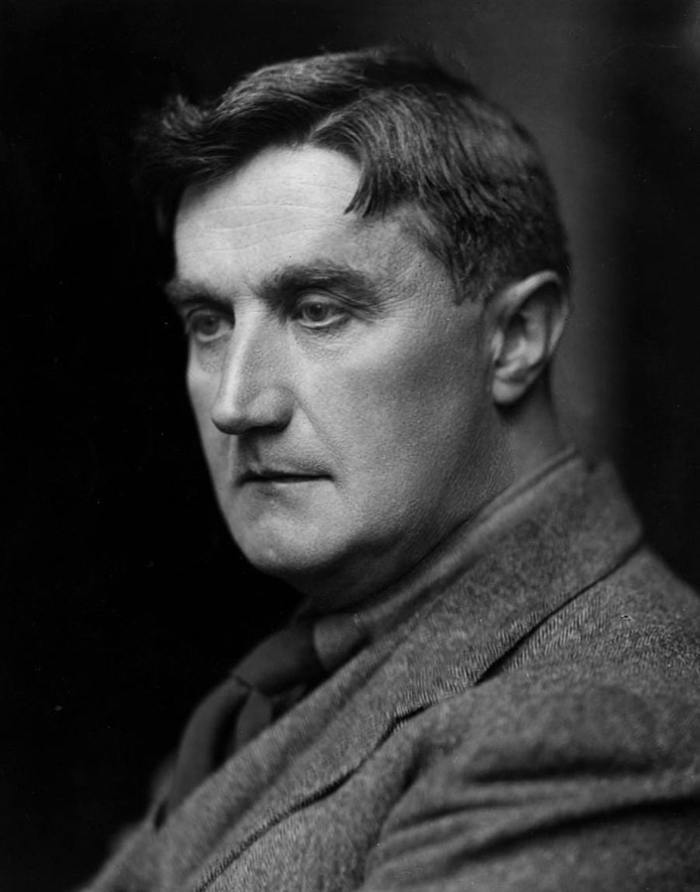
Ralph Vaughan Williams was born on October 12, 1872, in the quiet village of Down Ampney in Gloucestershire, England. What began in a small Cotswold parish would evolve into a legacy that defined English classical music for the 20th century.
His influence didn’t just resonate in concert halls; it became deeply ingrained in the nation’s culture.
A Scholar with Sound in His Blood
Born into an intellectually prominent family, he had relatives in both the Darwin and Wedgwood families. Surrounded by tradition and intellect, Vaughan Williams experienced a rich cultural environment. Following the early death of his father, the family relocated to Leith Hill Place in Surrey, where music became a constant presence in their lives.
He studied at Charterhouse School, the Royal College of Music, and Trinity College, Cambridge. His teachers included Charles Stanford and Hubert Parry in London, followed by Max Bruch in Berlin and Maurice Ravel in Paris. These experiences provided Vaughan Williams with a strong foundation in both German Romanticism and French Impressionism, yet he never lost sight of his English roots.
Collecting the Sounds of the Countryside
At the turn of the century, Vaughan Williams did something few composers before him had done: he went out into the countryside to collect and preserve English folk songs and carols. He believed the music of ordinary people carried the soul of a nation.
As editor of The English Hymnal, he reimagined sacred music for Anglican congregations. Two of his hymn tunes—Sine Nomine (“For All the Saints”) and Down Ampney (“Come Down, O Love Divine”)—are still sung in churches today.
War, Loss, and a New Voice
Although he was in his 40s when World War I broke out, Vaughan Williams volunteered for service. He lied about his age to enlist and eventually served as a stretcher-bearer in France, later becoming an officer in the Royal Garrison Artillery. The brutality of war and the loss of friends, such as composer George Butterworth, left a lasting impression on his music.
After the war, his tone grew more introspective and haunting. Works like the Pastoral Symphony and Dona Nobis Pacem carry echoes of the battlefield.
A Composer for All Seasons
Over his long career, Vaughan Williams wrote across nearly every musical genre: nine symphonies, five operas, chamber music, ballet, film scores, and large choral works. He also composed some of Britain’s most beloved orchestral pieces, including:
- The Lark Ascending
- Fantasia on a Theme by Thomas Tallis
- English Folk Song Suite
- Five Variants of Dives and Lazarus
His music blended tradition with innovation, being both earthy and transcendent, yet modern and unmistakably English.
Legacy of a Modern Master
Vaughan Williams refused a knighthood but accepted the Order of Merit in 1935. He remained creatively active into his 80s, marrying poet Ursula Wood after the death of his first wife.
He died on August 26, 1958. His ashes rest in Westminster Abbey near Henry Purcell, linking two giants of English music across centuries.