
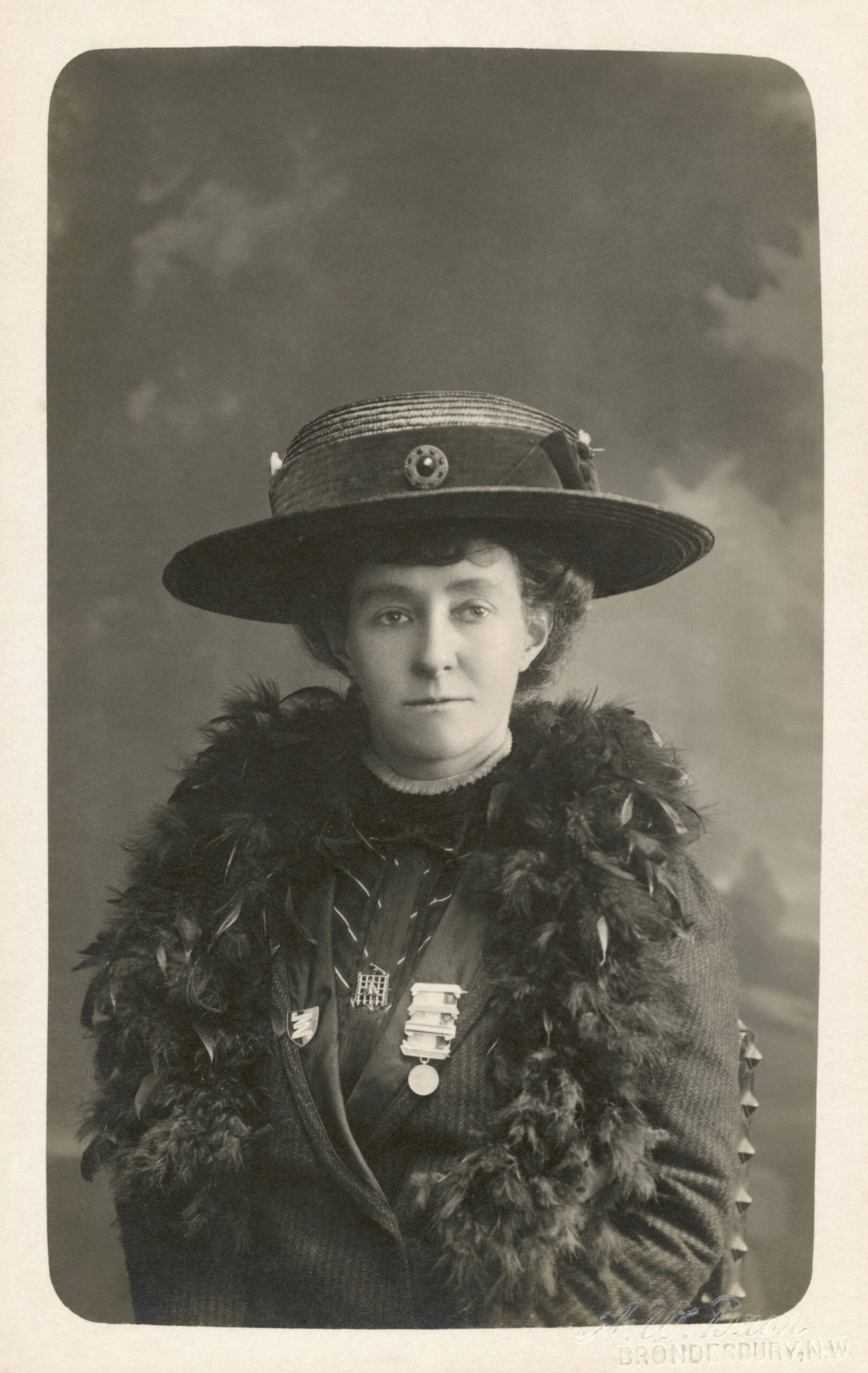
Emily Wilding Davison was born on October 11, 1872, in Greenwich, London. She dedicated her life to the fight for justice and the relentless pursuit of women’s suffrage in Britain. Her story is one of extraordinary courage and a steadfast belief in gender equality, culminating in one of the most iconic and controversial moments in the history of the suffragette movement.
Early Life
Davison was born into a middle-class family and enjoyed early access to education. She studied at Kensington High School, Royal Holloway College, and St Hugh’s College, Oxford, achieving first-class honors in English—although she was unable to graduate because Oxford did not award degrees to women at the time. Her academic success reflected her intellect and determination, which she would later channel into activism.
Davison joined the Women’s Social and Political Union (WSPU), a militant suffrage group founded by Emmeline Pankhurst, in 1906. Emily Davison quickly rose through its ranks, becoming known for her daring actions and radical tactics. Believing that peaceful protests were ineffective, Davison engaged in bold demonstrations: she broke windows, set fire to postboxes, hid in Parliament on census night, and endured numerous arrests. In total, she was imprisoned nine times and went on hunger strike seven times, leading to 49 episodes of brutal force-feeding.
A Harrowing Moment
In 1912, Emily Davison threw herself down a prison staircase in protest against the torturous practice of force-feeding. She survived, but suffered lasting injuries. Her actions were not always endorsed by the WSPU leadership, resulting in a complex and often strained relationship with the organization. Nonetheless, she remained fiercely dedicated to the cause.
Emily Davison is best known for her final, fatal protest. On June 4, 1913, she attended the Epsom Derby and stepped onto the racetrack during the race. She was struck by King George V’s horse, Anmer, and died four days later from a fractured skull. Her true intention remains a subject of debate—some argue it was suicide, others believe she intended to attach a suffragette banner to the horse. What is clear is that her death drew global attention to the suffrage movement.
Her Legacy
Her funeral on June 14, 1913, was a massive procession through London, attended by 5,000 suffragettes and watched by 50,000 mourners. Her coffin was inscribed with the suffragette slogan: “Fight on. God will give the victory.” She was laid to rest in Morpeth, Northumberland, beneath a headstone bearing the WSPU motto: “Deeds, not words.”