
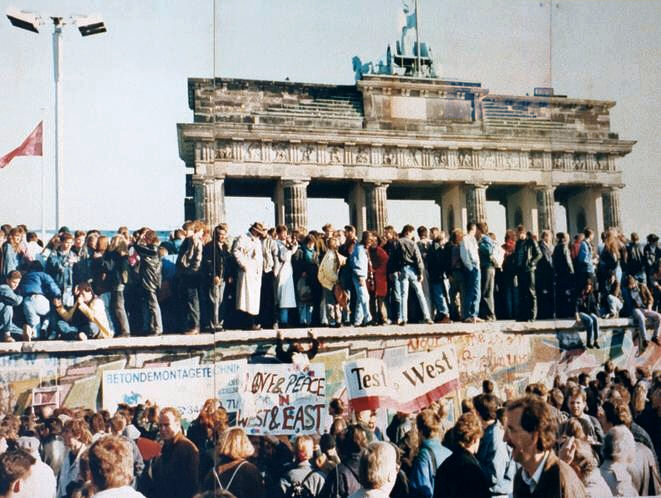
On this day in history, the concrete barrier that split a city and symbolized a divided world cracked and crumbled. The Berlin Wall fell on November 9, 1989. Not with bombs. Not with treaties. But with a confused announcement, a crowd’s determination, and history’s momentum.
Before The Fall
For 28 years, the Wall was the Cold War’s harshest line. Built in 1961 by East Germany, the Berlin Wall wasn’t just bricks and barbed wire. It was a fortress, guarded by soldiers, mines, and death strips. Its purpose? To stop East Berliners from fleeing to the West. But the Wall couldn’t hold back people’s hunger for freedom.
By the late 1980s, change was brewing across Eastern Europe.
- Poland elected a non-Communist leader.
- Hungary opened its border with Austria.
- Czechoslovakia stirred with protest.
- And in East Germany, public pressure boiled over.
Then Came November 9, 1989.
Günter Schabowski, a Communist Party official, gave a press conference. He fumbled through notes, misunderstood a memo, and casually announced that East Berliners could cross into the West “immediately.” Word spread like wildfire.
That evening, thousands of East Berliners gathered at the Wall’s checkpoints. Guards, confused and overwhelmed, opened the gates. No orders. No shots. Just open borders.
Crowds swarmed through. Some danced on top of the Wall. Others chipped off pieces. Hammers, fists, and tears did the rest. The Wall didn’t just fall. It collapsed under the weight of its own irrelevance.
Why did this Matter so Much?
The Berlin Wall represented much more than just a division within Berlin; it was a powerful symbol of the entire Cold War. When it fell, it marked a significant turning point: the end of the Cold War. Within a year, Germany was reunified, and within two years, the Soviet Union dissolved, leading to a complete redrawing of Europe’s map. The Wall’s collapse was unexpected, unplanned, and unstoppable. President George H.W. Bush was careful not to provoke Soviet hardliners and responded with a calm demeanor. However, behind the scenes, diplomatic efforts intensified.
American and European leaders navigated the aftershocks with care. New alliances formed. Old fears faded. And for millions, freedom felt real for the first time.
Today, pieces of the Wall sit in museums around the world.