
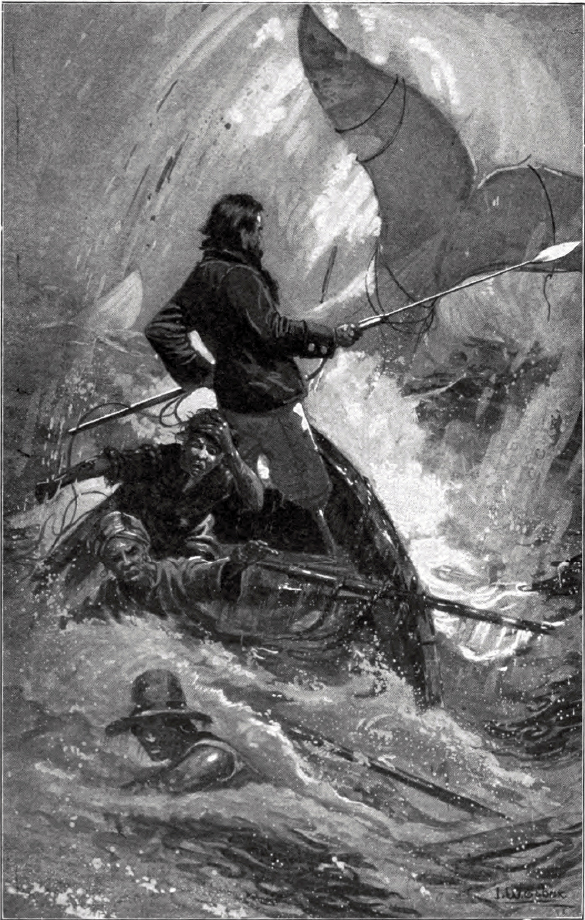
American author Herman Melville is best known for his adventure novels and short stories, which were inspired by his real-life experiences as a sailor on the Pacific Ocean. Today, he is remembered as the author of the Great American Novel, Moby-Dick, which was initially a flop but later became a classic. On November 14, 1851, the publishing company Harper & Brothers reluctantly approved the release of the novel in the United States.
An Author’s Inspiration
Herman Melville was born in 1819 in New York City to a family that lived in severe debt and poverty. After his father passed away, Melville was forced to quit elementary school at the age of 12 to help support his family. He struggled to find consistent work until he found a job as a deckhand on a merchant ship. Melville learned he loved being out on the sea and continued seeking jobs on merchant and whaling ships. And though the jobs helped support his brothers and sisters at home, life at sea eventually served a much bigger purpose in his life.
Herman Melville was deeply passionate about writing, but it was not a profitable pursuit, especially for someone seeking a consistent income. Despite this challenge, Melville persevered. When he began drawing on his real-life experiences at sea, he was able to launch his writing career successfully. He wrote several novels, 17 short stories, and numerous poems based on his maritime adventures and became quite popular.
Initial Publication
In 1851, after years of hard work, Herman Melville submitted a new manuscript to his American publishing company, Harper & Brothers. The book was a philosophical epic centered around a sea captain named Ahab and his obsession with hunting a giant sperm whale that had previously taken his leg. The story was dense, full of symbolism, and significantly darker than what the publishing company had come to expect from Melville. Titled Moby-Dick, the novel drew on Melville’s real-life experiences, much like many of his successful works. However, the publishers were less than impressed.
Harper & Brothers pushed back significantly on Moby Dick, believing it wouldn’t be popular with Melville’s audience. However, they agreed to publish it on November 14, 1851, a few weeks after the British edition, titled The Whale, was released.
A Flop Turned Classic
Moby Dick was not well received by the public. Harper & Brothers were correct in noting that Melville’s audience was put off by the dark, complex tale, which led to the novel’s commercial failure. The reviews were mixed but predominantly critical.
Melville was devastated by the criticism of his book, which led him to question his writing and his emerging career as an author. As a result, he fell into obscurity and never wrote another successful work.
At the beginning of the 20th century, long after Melville’s death, the novel Moby Dick was rediscovered through the “Melville Movement.” A group of literary scholars undertook a thorough reevaluation of his work, leading to the novel’s recognition as a literary masterpiece. Since then, Moby Dick has become known as a classic and is considered essential reading for anyone studying American literature.
Though Melville did not get to see the revival and appreciation for his masterpiece, his legacy lives on as many new readers embark on Captain Ahab’s obsessive quest each year.