
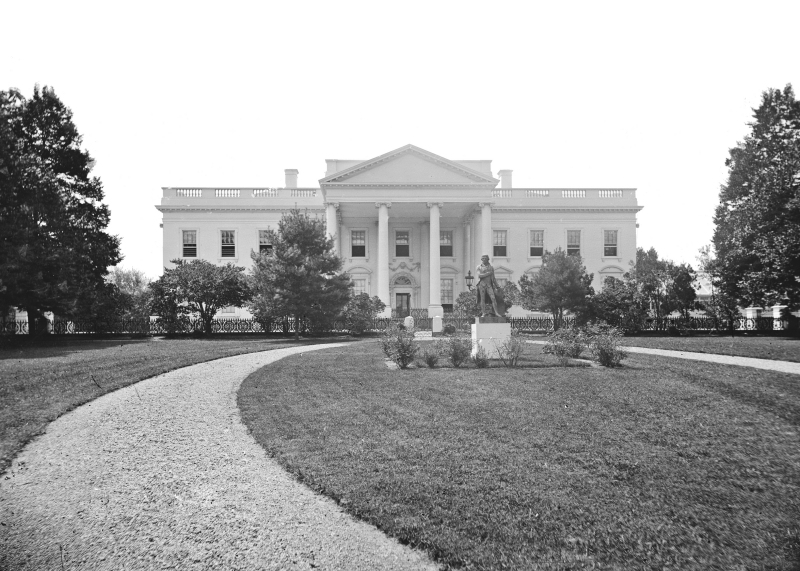
On this day in history, President John Adams entered an unfinished mansion in a half-built city, and history followed him through the door. It was called the “President’s House.” The capital was a swampy village still being carved from the wilderness.
The mansion itself? Damp. Sparse. Half-empty. But it was home.
And Adams became the first president to live in the White House on November 1, 1800.
Let’s Rewind
America’s seat of government had moved from New York to Philadelphia in the 1790s. But those were temporary homes. The Constitution demanded a permanent capital. Congress chose land along the Potomac River. The name? Washington, D.C.
The Executive Mansion, what we now call the White House, wasn’t ready for Adams’s full term. But with just months left in office, he made the move anyway.
He arrived alone at first. The house wasn’t finished. It was cold, the paint still wet, and much of the furniture hadn’t arrived. His wife, Abigail, followed days later. “It is habitable by firelight,” she wrote, “and the heat of the fire and the candles, and the company of a few friends, makes it cheerful.”
Why Did He Go?
Because he believed in the nation’s future, because the White House wasn’t just a house, it was a symbol. Moving in, even briefly, was a declaration: This is America’s home.
Adams didn’t decorate much. He used old furniture from Philadelphia and scraped by with borrowed items. The grand rooms echoed. Supplies were scarce. Everything, furnishings, carpets, even tea sets, had to be dragged in over miles of rough roads.
But still, the Adamses hosted New Year’s receptions, diplomatic gatherings, and family dinners in those cold, cavernous halls. They brought warmth where there was none.
Then Came Tradition
Before leaving office, Adams wrote a line that would echo for generations. In a letter to Abigail, he wrote: “I pray Heaven to bestow the best of blessings on this House and all that shall hereafter inhabit it. May none but honest and wise men ever rule under this roof.” Those words, later etched into the mantel of the State Dining Room, became a quiet promise, a standard for every president who followed. The Adams legacy? Quiet, sturdy, and enduring.
They didn’t stay long. Thomas Jefferson won the 1800 election and moved in the following March. But John and Abigail Adams had done something bigger than unpack boxes. They had made a statement: The government was here to stay. This house, unfinished, uncertain, would grow into a symbol of democracy.
And it all began with Adams crossing the threshold on a cold November morning.
So when you picture the White House lit up at night, filled with ceremony and power, remember this: It started with a president, a fireplace, and a whole lot of faith in the American experiment.