
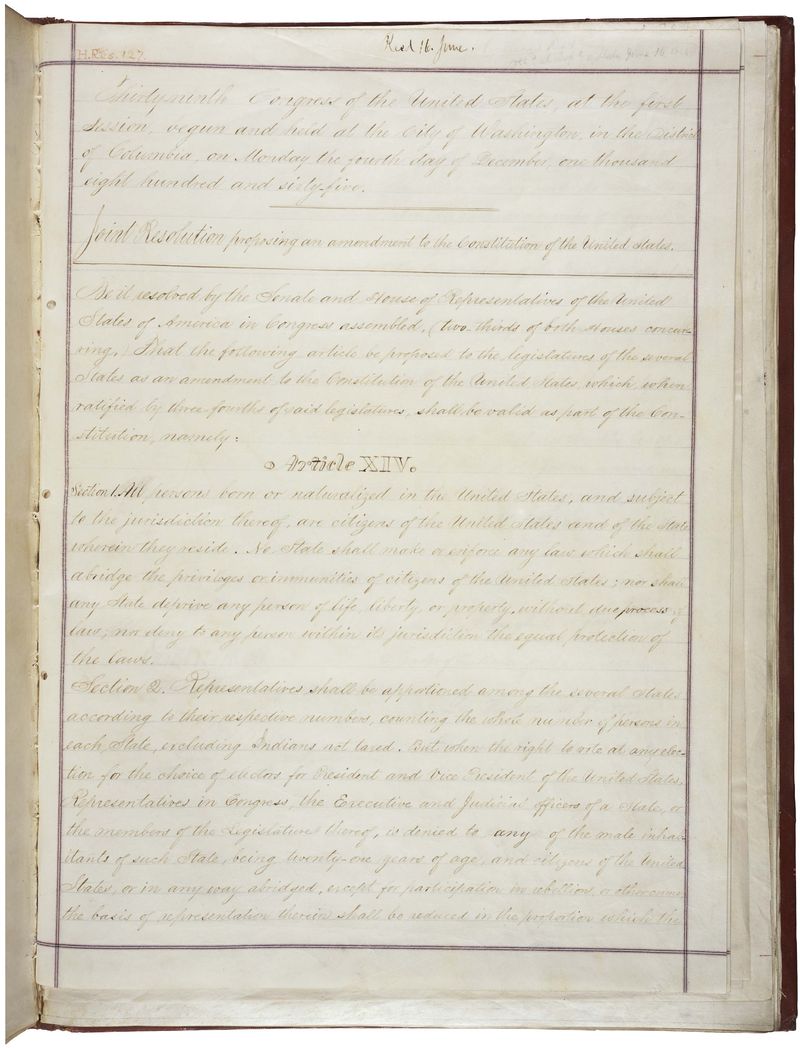
The 14th Amendment, ratified on July 9, 1868, granted citizenship to all persons naturalized in the United States and provided complete legal protection for all citizens.
The Confederate states bitterly contested the 14th Amendment because it gave the right to formally enslaved persons to be citizens and enjoy the full protection of the law, as well as own property. However, the Confederate states were forced to ratify the Amendment to regain representation in Congress.
Fun Facts:
- All citizens encompassed the newly freed enslaved persons. In addition, the 14th Amendment forbade the states from denying any such person life, liberty, or property without the due process of the law.
- This amendment is now more cited in litigation than any other because it wholly and clearly grants all citizens civil rights.
- The 14th Amendment added to the fundamental rights of enslaved persons initiated in the 13th Amendment, which officially abolished slavery.
- The 14th Amendment did not make all residents born in the United States citizens. The one exception to this law was Native Americans, who were not made citizens until 1924.
- In addition, the 14th Amendment gives courts the right to step in and protect “vaguely defined rights.”
- The 14th Amendment gives Congress an active role in protecting the rights of individuals and minority groups in all states.
- Although the 14th Amendment was ratified in 1868, it took a few years before the rights of black people were protected in the court of law.