
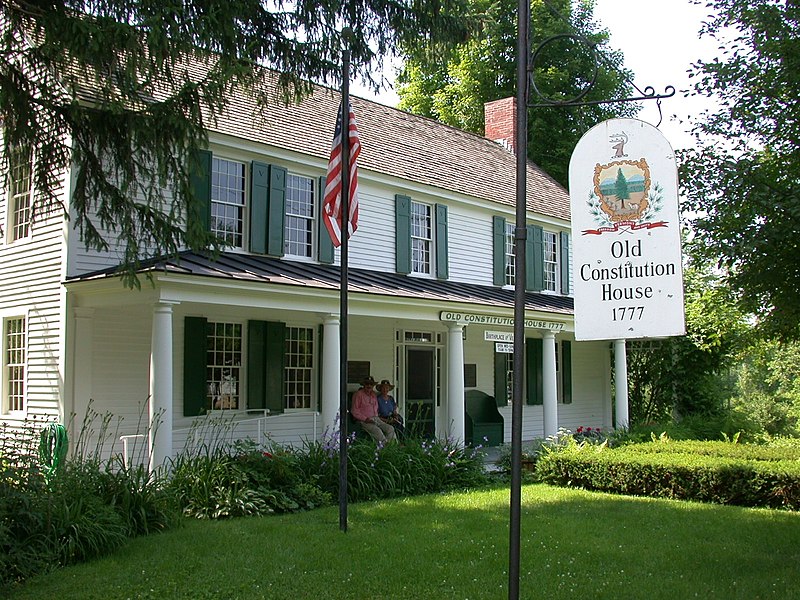
The Vermont Colony made history by being the first colony to abolish slavery, but the state’s history is full of struggle. Vermont land was bought from New Hampshire’s Colonial Governor and was under the control of New York. The settlers resisted recurrent attempts by the New York government to exert political power over them. The Vermont colony declared independence from New York on July 8, 1777. To show their resolve to keep their independence, the settlers renamed the land, previously named New Hampshire Grants, Vermont.
The settlers, unwavering in their commitment, subsequently formed a popular government that truly represented their interests. One of the most remarkable aspirations among the settlers was the liberation of all enslaved people who met specific criteria. For instance, an enslaved man could only be emancipated after reaching the age of 21, and women were eligible at age 18, provided they did not owe their master any debts.
However, only some were in favor of these laws. As detailed in ‘The Problem of Slavery in Early Vermont,’ prominent figures such as Levi Allen, Ethan Allen, and Stephen Jacob leveraged their political and military authority to bypass the anti-slavery laws enacted on July 8, 1777. These laws were easily circumvented, as the enslavers could fabricate documents stating that the enslaved person was younger than they were.
Because of their persistent resistance to political subjugation, retaliation was swift, and Vermont was initially denied admission to the Union. It had to exist as an unrecognized state until 1791 when it finally gained recognition as the 14th state of the United States.
Shortly after, the state participated in the 1791 United States census. Vermont’s first censors’ results left more questions than answers because, according to collected data, there were still 16 enslaved people living in Bennington County. Authorities in Vermont would later deny the authenticity of this data, claiming that there were never any enslaved people in Vermont. The false data would later be chalked up to clerical errors.