
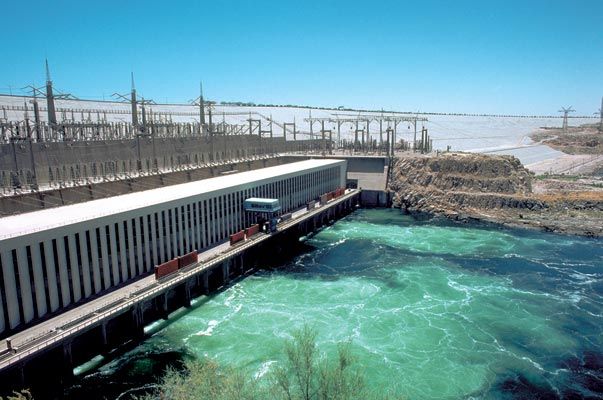
Following the 1952 Egyptian Revolution, the country underwent a period of profound political change under the new military regime. One significant development during this time was the construction of a massive dam on the Nile River, known as the Aswan High Dam. This dam was designed to control annual flooding better, improve water storage for crop irrigation, and generate hydroelectricity. The construction of this monumental project was completed on July 21, 1970.
The Aswan High Dam is a massive structure that took over 10 years to complete. It stands 111 meters tall and stretches over 3,800 meters in length, utilizing 44 million cubic meters of materials during its construction. More than 34,000 workers were involved in building the dam. The project created a reservoir called Lake Nasser, which holds over 169 billion cubic meters of water. In addition to its size, the dam is also powerful, housing a hydroelectric plant that generates over 2 gigawatts of power.
The impact of the Aswan High Dam is complex and multifaceted, primarily because the dam was highly effective in achieving its goals. It was constructed to support Egypt’s modernization and industrialization efforts. The Aswan High Dam successfully reduced annual flooding, a key objective. It also improved food production and provided a safer means of water transportation. Additionally, the dam significantly increased the nation’s electricity production. However, the dam also had negative consequences. Its construction forced the relocation of over 100,000 people and led to the flooding of several archaeological sites. Furthermore, the dam contributed to increased coastal erosion and heightened occurrences of certain diseases. Regardless of one’s perspective on its impact, the Aswan High Dam remains one of the world’s largest embankment dams.