
Bastille Day in the year 2000 was unusually exciting, as even the Sun seemed to join in the celebration. On July 14, 2000, satellites detected the beginnings of a disturbance at around 10:00 a.m. This disturbance culminated in an X-class solar flare, the most intense category of solar flares, which lasted for several days. Now known as the Bastille Day Solar Flare, this event had lasting impacts on the study of the sun, space weather, and the development of mitigation strategies for solar events.
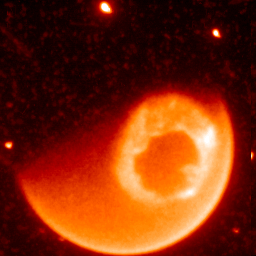
The Bastille Day Solar Flare occurred in a highly active region of the Sun, known as AR9077, resulting in a significant event. This solar flare was classified as an X5.7, indicating a powerful occurrence. On July 14th, a Coronal Mass Ejection (CME) was also detected. A CME is a large eruption of magnetic fields and plasma from the Sun’s corona, creating a massive bubble of solar material that is ejected into space and can enter Earth’s atmosphere. This event also triggered a Solar Energetic Particle event, which further impacted Earth’s atmosphere and caused disturbances. The Earth’s magnetic field experienced disruptions, leading to various technological issues, including problems with internet connections, GPS signals, and power grids. Additionally, in celebration of Bastille Day, the solar flare produced beautiful auroral light displays in the sky.
The solar flare that occurred on Bastille Day in the year 2000 was one of the most powerful recorded. This event marked a significant turning point, prompting scientists to intensify their efforts to better understand space weather. It also highlighted Earth’s vulnerability to solar events and emphasized the necessity for improved monitoring of space and its weather patterns.