
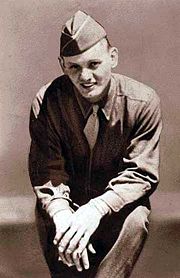
Eddie Slovik, a man who never wanted to go to war, found himself drafted into the army against his will. His criminal record, which initially led to him being classified as 4-F and excused from the draft, was not enough to spare him. The army, in desperate need of troops to fight against Hitler’s forces, lowered its standards and reclassified Slovik, forcing him into military service.
Once accepted, he was trained to be a rifleman, which made things even worse for him because he hated guns. He was then sent to France to fight on the front line. On his way there, he and a companion got lost and were found by a Canadian military unit, which returned them to the American forces. Charges of desertion were considered but ultimately not pursued, as it was reasonable to think that new soldiers might get lost in all the noise and confusion of war. So they were sent out to fight again. This experience, combined with his fear of combat and his dislike of guns, created a personal struggle for Slovik that would ultimately lead to his fateful decision.
When the time came for Slovik to fight, he found himself unable to do so. He was overwhelmed by fear, a fear so strong that he was willing to run away rather than face it. His commanding officers, perhaps unable to fully comprehend his terror, ignored his pleas. He ran away, but returned the next day, signed a confession to desertion, and once again expressed his fear. Despite an officer’s advice to recant, he stood by his confession.
When Slovik was offered a chance to avoid a court martial by immediately taking his place on the front line, he refused. He was determined to have his case heard. However, his refusal to fight did not go unpunished. He was convicted of desertion. His case, made public by his own actions, was used as an example. Prosecutors argued that his execution was necessary to deter others from following his path. And so, on January 31, 1945, he was executed.