
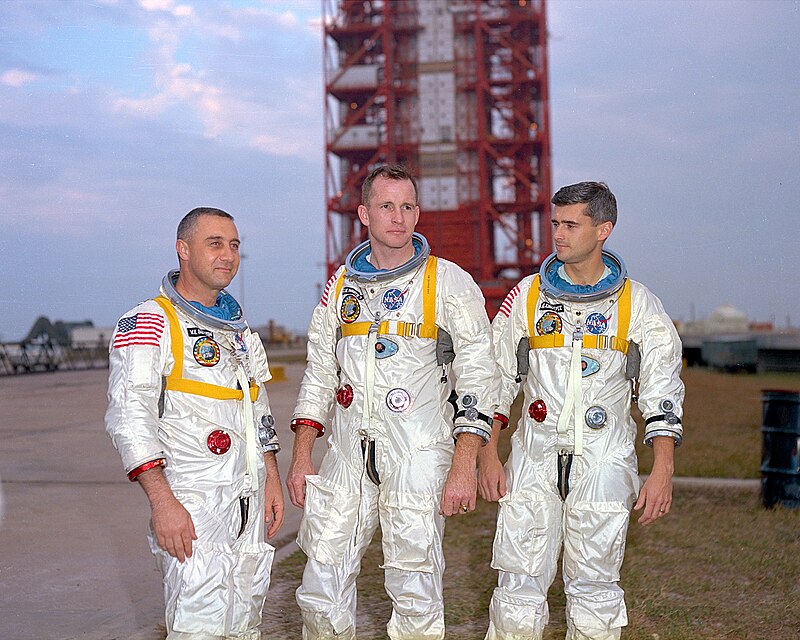
On January 27, 1967, a tragic fire broke out in the Apollo 1 spacecraft during a pre-launch test on the launch pad at Cape Kennedy Air Force Station in Florida. The incident claimed the lives of three American astronauts: Virgil “Gus” Grissom, Edward H. White II, and Roger B. Chaffee. These brave men, who were part of the highly anticipated mission aimed to be the first crewed flight of the Apollo program, were performing a test in a pure oxygen atmosphere inside the cabin when the fire broke out. Despite the valiant efforts of the ground crew to rescue them, the astronauts were unable to escape. This heartbreaking event led to significant changes in NASA’s safety protocols and spacecraft design to ensure the safety of future missions.
The crew performed a “plugs-out” test, simulating a launch sequence with the spacecraft operating on internal power. At the time, the cabin was pressurized with pure oxygen at higher than atmospheric pressure, a standard practice. At 6:31 PM, a fire ignited inside the command module. The exact cause remains undetermined, but it is believed that faulty wiring or a short circuit could have been the reason. The fire spread quickly, reaching extreme temperatures and producing dense smoke. The inward-opening hatch design made it impossible for the astronauts to escape quickly, trapping them inside.
Aftermath and Impact
NASA launched a comprehensive investigation, leading to significant design and protocol changes to enhance astronaut safety. The Apollo program paused for shy of two years to implement safety improvements, which delayed subsequent missions but ultimately contributed to the success of future lunar landings. The Apollo 1 tragedy was a stark reminder of the inherent risks of space exploration, and its impact on future missions cannot be overstated.
Grissom, White, and Chaffee served as a somber reminder of the inherent risks of space exploration. Their legacy endures in the rigorous safety standards and protocols that continue to protect astronauts today. For those who share our interest in the Apollo 1 tragedy and its aftermath, we recommend the article “Apollo 1 tragedy: The fatal fire and its aftermath” on Astronomy Magazine’s website for a more detailed account.