
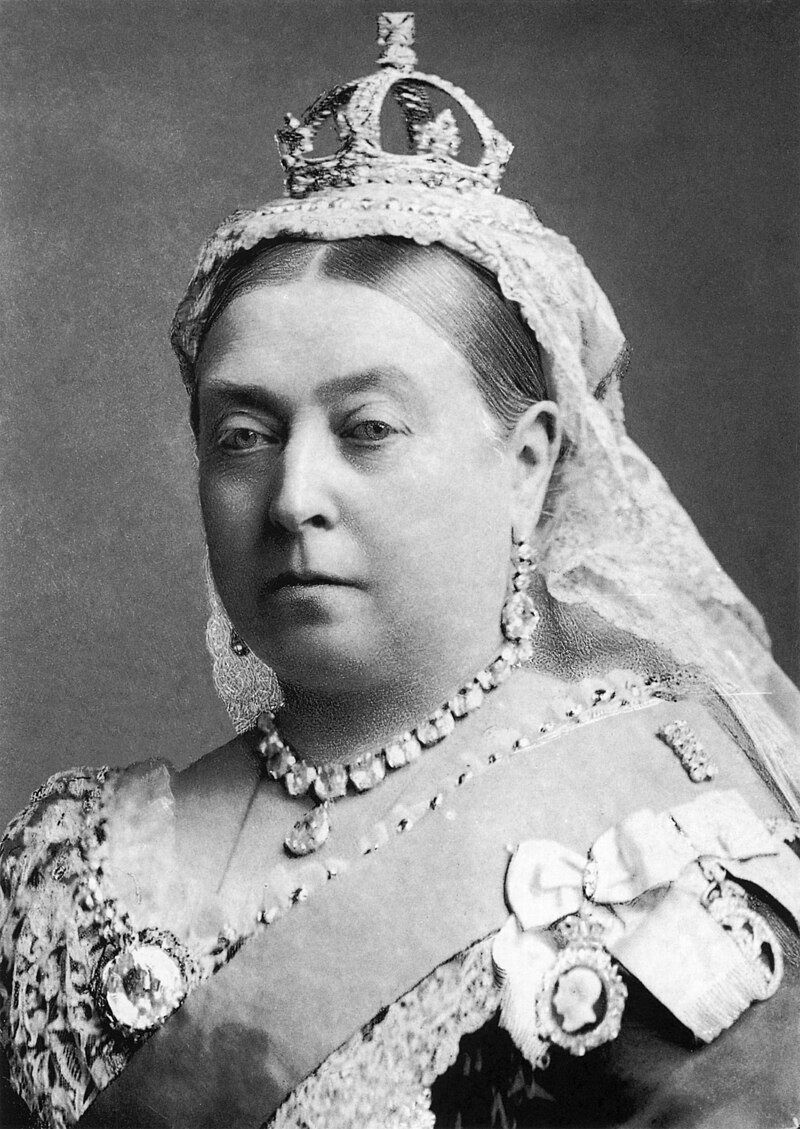
On January 22, 1901, the United Kingdom mourned the conclusion of a transformative reign with the death of Queen Victoria. She was the second-longest reigning monarch in British history, and her passing at Osborne House on the Isle of Wight marked the end of the Victorian Era. Victoria’s rule was a catalyst that reshaped the political, industrial, and cultural landscapes of the 19th century.
Queen Victoria’s Legacy
Victoria ruled for 64 years, taking the throne at 18 in 1837. During her reign, the British Empire expanded to its zenith, earning it the nickname “the empire on which the sun never sets.” The Victorian Era was a time of rapid innovation. Railways, the telegraph, and the Industrial Revolution revolutionized life. Queen Victoria became a symbol of continuity and stability in a rapidly changing world through wars, revolutions, and societal upheavals.
As she got older, Queen Victoria’s health worsened. By early 1901, she was bedridden and suffering from a series of strokes. Her family gathered at Osborne House, anticipating the inevitable. With the ascension of her eldest son, Edward VII, a new era dawned. The Edwardian Era brought a stark contrast to the formality of Victorian life, emphasizing leisure and modernity. This cultural shift, following the death of Queen Victoria, marked a significant turning point in British history.
Global Impact
Victoria’s death had a ripple effect across the globe. Although it coincided with the dawn of the 20th century, a time of burgeoning social and technological change, she will forever be remembered as a figurehead in Britain.
Her influence extended far beyond politics, embedding itself in the time’s culture, art, and identity. Even today, her legacy endures, from the architecture of Victorian cities to the many traditions and customs she popularized.
On that cold January day, as Britain bid farewell to its “Grandmother of Europe,” the world collectively turned a page, leaving behind one of history’s most defining chapters.