
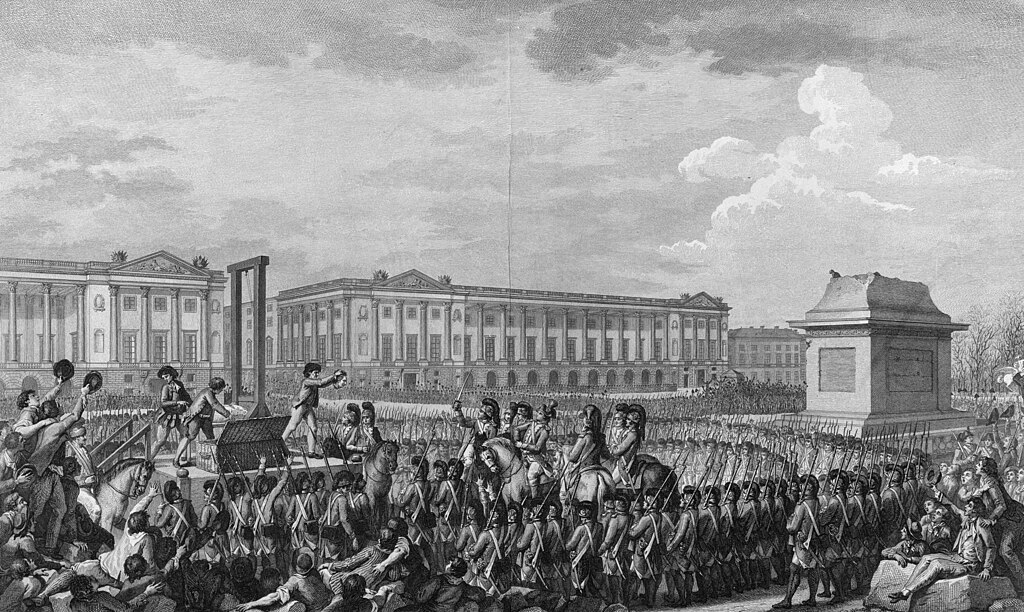
On January 21, 1793, King Louis XVI of France was executed by guillotine in a public square in Paris. This momentous event occurred during the height of the French Revolution, a time of intense social and political upheaval in France. The revolutionary government, which had grown increasingly radical, viewed the king as a symbol of the oppressive monarchy and a threat to the newly established republic. His execution not only marked the definitive end of royal rule in France but also sent shockwaves throughout Europe, as monarchies across the continent began to fear for their stability amid rising revolutionary sentiments. The death of Louis XVI catalyzed further radical changes in France and significantly influenced the course of the Revolution and political dynamics in Europe for years to come.
The Fall of a King
- Louis XVI ascended the throne in 1774 at just 20 years old.
- By the late 1780s, years of lavish spending, combined with the costly American Revolutionary War, pushed France to the brink of bankruptcy.
- The French Revolution erupted in 1789, powered by widespread discontent with economic inequality, high taxes, and autocratic rule.
The Path to the Guillotine
- In 1791, Louis XVI and his family attempted to flee France, hoping to rally loyalists and foreign allies. The plan failed, and they were captured at Varennes.
- The monarchy was officially abolished in September 1792, and the king became Citizen Louis Capet.
- Louis was put on trial by the National Convention, accused of “conspiring against the liberty of the nation” and aiding France’s enemies during the revolution.
- After intense debate, the Convention voted overwhelmingly for his execution—the final tally: 361 for death, 288 against, with many abstentions.
Execution Day
- Louis XVI faced his death by guillotine in the Place de la Révolution (now Place de la Concorde).
- He mounted the scaffold calmly, delivering his final words: “I die innocent of all the crimes imputed to me; I pardon the authors of my death, and I pray to God that the blood you are about to shed will never fall upon France.”
- The blade fell at 10:22 a.m., severing the monarchy from its divine right to rule.
Aftermath and Legacy
The execution of Louis XVI further polarized Europe. Monarchies denounced the French Republic, while revolutionaries saw it as a victory for liberty. It marked the start of the Reign of Terror (1793–1794), a period of mass executions under Maximilien Robespierre and the radical Jacobins.
- Louis XVI’s death symbolized the Revolution’s fierce determination to dismantle the old order and establish a new, egalitarian society.
This day remains a turning point in world history.