
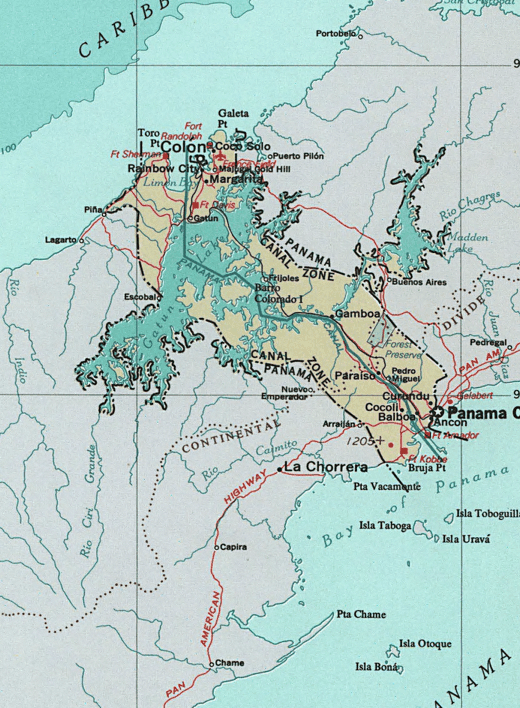
On February 23, 1904, the United States, demonstrating its engineering prowess, purchased the Panama Canal Zone for $10 million to construct the Panama Canal. After Panama’s independence in 1903, the United States secured control over a 10-mile-wide strip through the Hay-Bunau-Varilla Treaty. This agreement laid the foundation for one of the most significant engineering feats of the twentieth century. The construction project, a testament to the United States’ engineering capabilities, combined improved ocean trade routes with naval strategy modernization, facilitating expedited naval and commercial passage across oceans.
Background of the Canal Purchase
The Panama Canal, strategically connecting the Pacific and Atlantic sides, owes its existence to Panama’s narrow landmass. This 50-mile span has revolutionized international trade, significantly reducing ship navigation times. The French, led by Ferdinand de Lesseps, first attempted to build the canal but faced insurmountable health and funding issues. The United States, eager to establish a transoceanic route, negotiated the Hay-Bunau-Varilla Treaty with Panama in 1903, gaining control over a 10-mile-wide zone. In 1904 the United States took over the project, led by engineers John Stevens and George Goethal. This massive engineering effort, undertaken to reduce trade routes between the Atlantic and Pacific Oceans, was completed in 1914, marking a significant milestone in global trade history.
Impact and Legacy
The completion of the Panama Canal revolutionized global trade operations. It made local shipping routes more feasible, as vessels no longer had to navigate the hazardous South American route. In 1935, the construction of the Madden Dam introduced new efficiencies to the canal. In 1999, Panama gained full ownership of the canal while continuing to play a crucial role in connecting global shipping routes. Today, the Panama Canal remains essential for international trade, with U.S. shipping accounting for 66% of its container freight in 2019.