
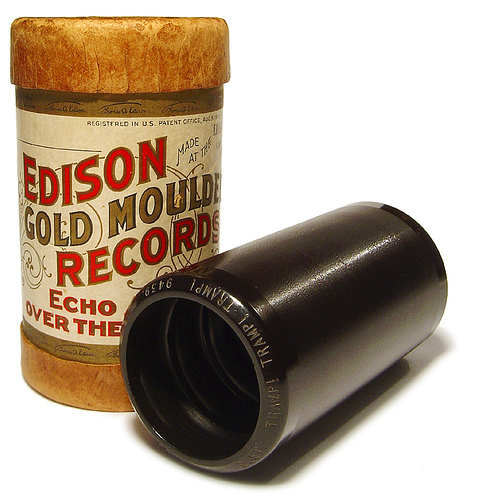
On February 19, 1878, Thomas Edison secured U.S. Patent No. 200521 for his groundbreaking invention of the Cylinder Phonograph. This development was critical in the history of audio technology as it created the world’s first sound recording and playback device.
Edison’s Revolutionary Invention
In 1877, Thomas Edison accidentally laid the groundwork for his invention of the phonograph during a time when the telegraph and telephone were being improved. He conceptualized that sound vibrations could be converted into markings on a rotating cylinder covered with tinfoil. These indentations could then be played back using a stylus. When Edison demonstrated the device in December 1877, the results were astonishing, and audiences were captivated as they listened to recorded voice playback.
Impact on Sound Recording
When the phonograph first appeared, it seemed like a gimmick until researchers noticed it could store music alongside business orders and preserve recorded speech. Edison envisioned possible uses for his invention across three fundamental applications: educational purposes, telecommunication, and historical sound production. His innovations launched an entertainment revolution that changed how audiences listened to music and audio recordings. The phonograph transformed the way music was consumed and paved the way for the modern entertainment industry.
Through innovation, tinfoil phonographs evolved into wax cylinders, and eventually, developers created flat disc records, which became the industry standard. Edison’s groundbreaking contributions shaped modern audio technology, transforming how people experienced music, recorded speech, and preserved sounds for future generations.
Did You Know?
- Edison originally envisioned the phonograph as a tool for business dictation rather than entertainment.
- The first recording he made on the phonograph was “Mary Had a Little Lamb.”
- Early phonograph cylinders were coated in tin foil, which wore out quickly. This led to the development of wax cylinders, a more durable and long-lasting material. The transition from tinfoil to wax significantly improved the phonograph’s design and usability.
- In the late 1800s, coin-operated phonographs were placed in public spaces, allowing people to listen to recordings for a fee.