
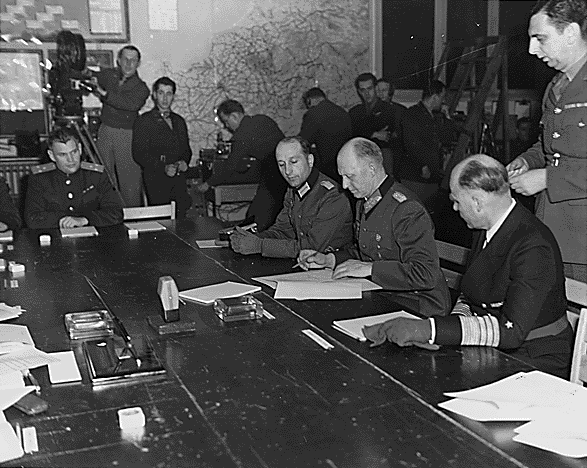
On May 7, 1945, Germany signed the German Instrument of Surrender, which was an unconditional surrender to the Allied Forces and effectively marked the end of World War II. An unconditional surrender occurs when the defeated party admits defeat without any assurances regarding their treatment or future conditions. This type of surrender allows the victorious party to determine the terms and fate of the surrendering nation and its territory. In this case, Germany’s unconditional surrender ensured the conclusion of the war and the dissolution of the Third Reich.
The surrender document was actually signed twice. The first signing took place in Reims, France, by German General Alfred Jodl for the Allied Forces. The document was signed again at the request of the Soviet Union on May 8, 1945, by Field Marshal Wilhelm Keitel in Berlin. The Soviets insisted on this second signing because they believed the initial signing did not sufficiently address the surrender of Germany to the Red Army.
Terms of the Unconditional Surrender
- Officially ended the active fighting in Europe and indicated the Allied victory.
- The Unconditional Surrender also marked the termination of the Third Reich, a regime that had caused untold suffering. The Allied powers assumed the responsibility for governing the German people, bringing a sense of closure and relief to the war-torn nation.
- The Unconditional Surrender also meant a significant shift in power dynamics. Any previously held pacts or treaties were null and void, and the Allied forces were not obligated to uphold anything, a clear indication of their newfound authority.
- The Allied forces were granted a “free-hand” policy, which meant that they could determine how to administer Germany and were free to make any territorial changes.
- Germany was divided into four zones, controlled by the United States, the Soviet Union, Great Britain, and France. Berlin, located in the zone controlled by the Soviet Union, was also divided into four additional zones.