
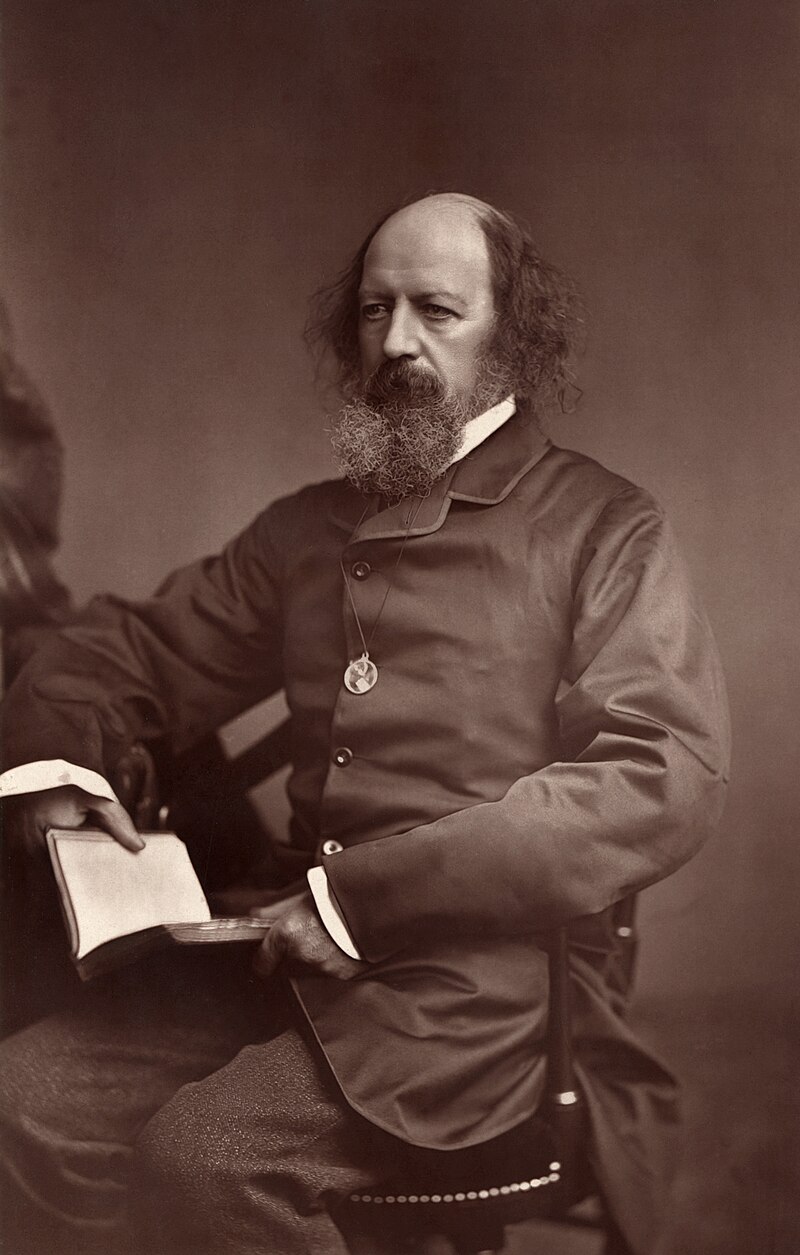
August 6, 1809, marks the day that a child was born in the quiet village of Somersby, Lincolnshire, England, who would later become one of the most celebrated poets in British literary history. Alfred Tennyson, who would eventually be known as Alfred, Lord Tennyson, was born during a time of significant social and political upheaval. Notably, he was born in the same year as Charles Darwin, Edgar Allan Poe, and Abraham Lincoln.
Alfred Tennyson was born into a large family with twelve children, leading a life filled with both privilege and challenges. He began writing poetry at a young age, composing verses by the time he was eight. By the age of fourteen, he had crafted an epic poem consisting of 6,000 lines. With the help of his brothers, Alfred published a collection of his work at the age of 17. However, it was at Trinity College where his identity as a poet truly flourished. There, he joined the Cambridge Apostles, an intellectual society that included notable figures like Arthur Henry Hallam. Hallam became Tennyson’s closest friend and later inspired some of Tennyson’s most significant work after his tragic early death.
Rising to the Laureate
In 1850, Tennyson became Britain’s Poet Laureate, succeeding William Wordsworth. That same year, he married Emily Sellwood, a love he had known since childhood.
Tennyson wore the laurel for over 40 years, the longest of any British poet. His pen captured the spirit of Victorian England.
- He wrote about war and heroism in “The Charge of the Light Brigade.”
- He honored royalty and statesmen in public odes.
- He immortalized the myth in “Idylls of the King,” a retelling of the Arthurian legend.
- He also wrote the works of “In Memoriam A.H.H.,” and “The Charge of the Light Brigade,” addressing topics ranging from scientific doubt and religious faith to imperial glory and personal loss.
His phrases entered everyday language:
- “To strive, to seek, to find, and not to yield.”
- “‘Tis better to have loved and lost than never to have loved at all.”
Alfred, Lord Tennyson, was laid to rest in Westminster Abbey in 1892. He was a national figure, mourned by millions.