
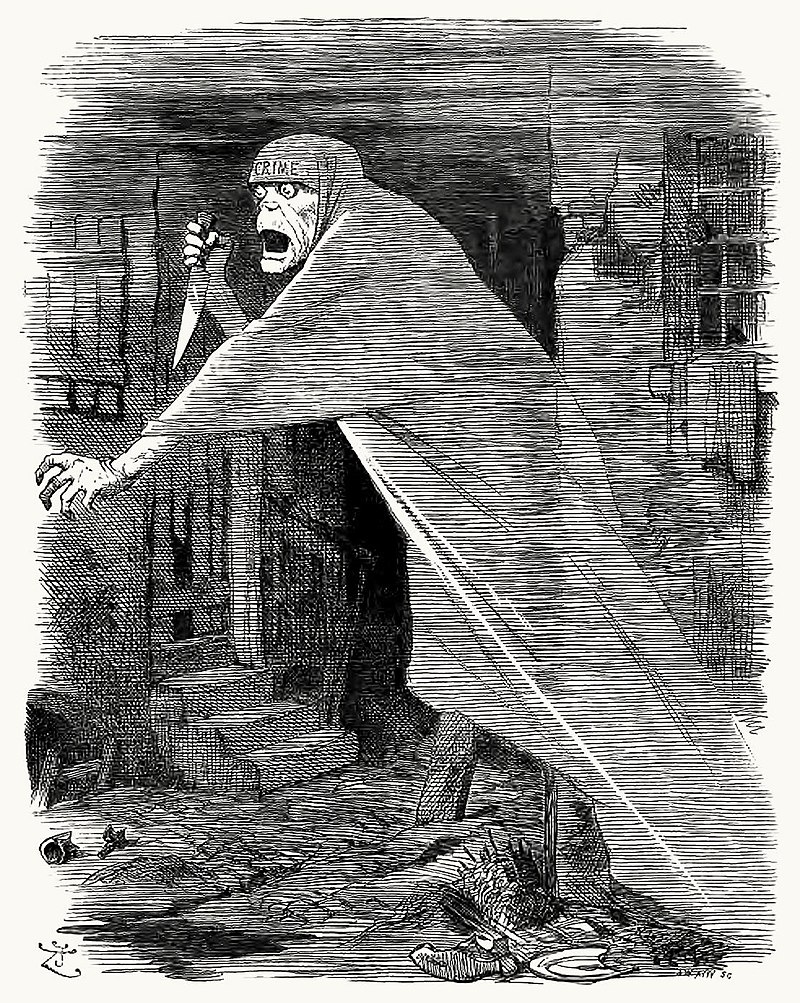
On a dark, quiet morning in Whitechapel, London, the body of Mary Ann “Polly” Nichols was discovered in Buck’s Row on August 31, 1888. Her murder marked the beginning of a terrifying chapter in history—the reign of “Jack the Ripper.” The case gripped Victorian society with terror and intrigue, and it continues to fascinate historians, criminologists, and the public today.
The Discovery in Buck’s Row
At around 3:40 a.m., Nichols’ body was found by a cart driver named Charles Cross on Buck’s Row (now Durward Street). She was lying on the ground with her throat savagely slashed and her abdomen mutilated. Constable John Neil quickly arrived on the scene and confirmed her death. Nichols was a 43-year-old woman who had struggled with poverty and alcoholism, which was not uncommon for individuals who lived in London’s East End. She, like many other women, was a target in an area plagued by crime, overcrowding, and desperation.
The Beginning of a Killing Spree
Nichols’ murder shocked the community, but it was only the first in a series of killings that shared gruesome similarities. Within a matter of weeks, other women—Annie Chapman, Elizabeth Stride, Catherine Eddowes, and Mary Jane Kelly—were murdered in a comparable fashion. The brutality of the crimes, including deep throat cuts and abdominal mutilations, suggested the killer possessed anatomical knowledge, leading to speculation that he may have been a butcher, surgeon, or medical student.
The press quickly seized on the story, and soon the mysterious figure received a chilling name: “Jack the Ripper.” Letters, some genuine and many likely hoaxes, began appearing at police stations and newspapers, taunting investigators and fueling the public’s fear.
Investigative Challenges
The Metropolitan Police initiated a significant investigation, interviewing hundreds of individuals and pursuing numerous leads. However, despite their efforts, the killer managed to evade capture. The limitations of Victorian policing, including the lack of forensic science, modern profiling techniques, and fundamental crime scene analysis, led detectives to rely more on speculation than on solid evidence.
The murders highlighted the stark contrast between the poverty-stricken East End and the wealthier areas of London. Newspapers sensationalized the crimes, not only to sell papers but also to expose the conditions endured by the poor. The Ripper case became both a criminal investigation and a symbol of social neglect, which in turn garnered tons of attention.
A Legacy of Fear and Mystery
The murder of Mary Ann Nichols was just the beginning of the Ripper saga. Her death transformed what might have been seen as another tragedy in a dangerous neighborhood into the first chapter of a series that would capture global attention. The case remains unsolved, with theories about the killer ranging from local tradesmen to members of the aristocracy.
Over 135 years later, Jack the Ripper remains an enduring mystery.