
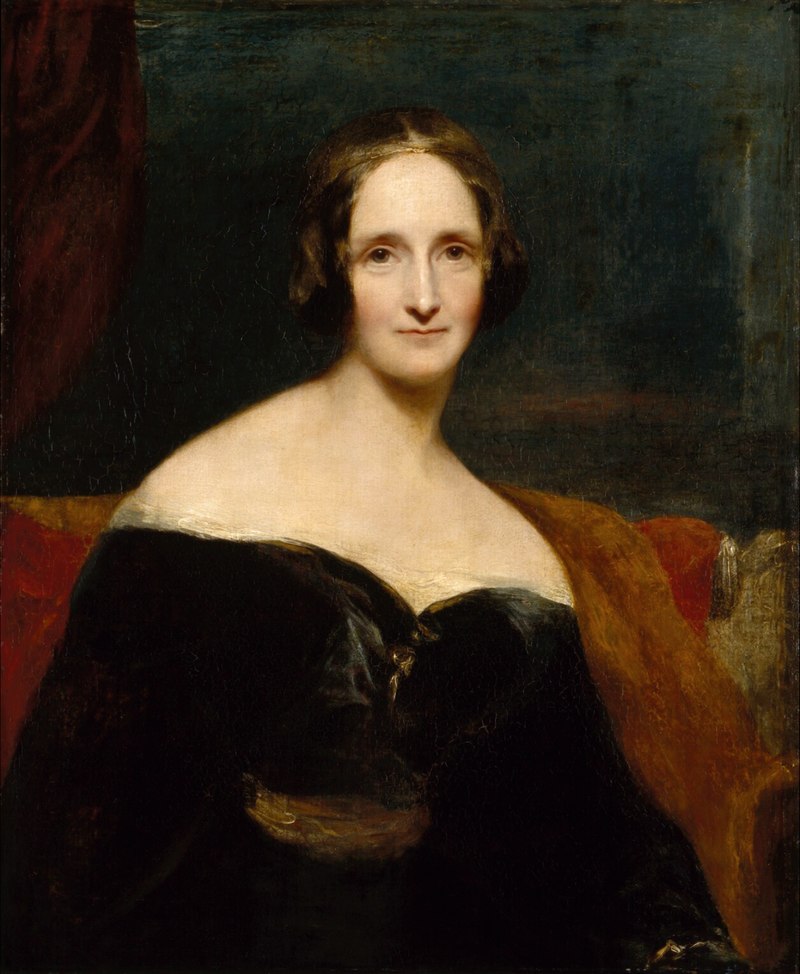
On a stormy night in 1816, a young woman had a waking dream. In it, a pale scientist knelt beside a man-made creature, willing it to life. That dream would change the course of literature forever. But the woman behind the monster—Mary Shelley—was already living a life as wild as any Gothic novel.
How It Began
It all began on August 30, 1797, when Mary Wollstonecraft Godwin was born in London. Her lineage alone foreshadowed greatness. Her mother, Mary Wollstonecraft, was a pioneering feminist, best known for A Vindication of the Rights of Woman. Her father, William Godwin, was a radical political philosopher. Ideas flowed through Mary’s childhood home like electricity.
But that home knew heartbreak, too. Her mother died just days after giving birth, and Mary was raised by her father and later a despised stepmother. Still, her education was unmatched; her tutors were the likes of Samuel Taylor Coleridge and Aaron Burr. Books, ideas, and revolutionary thinking shaped her from the start.
Then came Percy Bysshe Shelley, a married poet and follower of her father’s political thought. Mary fell for him, hard. At 16, she eloped with him to France, scandalizing society. Their journey was penniless and chaotic, but it forged her voice. Loss shadowed her early years with Percy—multiple children died young, and tragedy was never far off.
In 1816, Mary, Percy, and her stepsister Claire Clairmont joined Lord Byron in Switzerland. The summer turned gloomy and cold—the infamous “Year Without a Summer.” Stuck indoors, Byron proposed a ghost story contest. What came from Mary was Frankenstein; or, The Modern Prometheus—a tale of ambition, creation, and consequence. Published in 1818, it was a genre-bending bombshell: part horror, part science fiction, all original.
But life didn’t ease up. In 1822, Percy drowned off the coast of Italy. Widowed at 24, Mary returned to England with their only surviving child. She spent the rest of her life writing—historical novels like Valperga, dystopian works like The Last Man, and editing Percy’s legacy. She battled illness, grief, and societal judgment, yet remained fiercely committed to her craft.
Mary Shelley passed away in 1851, but her influence has never faded. Frankenstein became more than a novel—it sparked debates on science, ethics, and humanity that still burn today.
Why She Still Matters
- She pioneered science fiction before the term was even coined.
- She challenged the boundaries of gender, art, and morality.
- She wrote from experience—loss, love, betrayal, and brilliance.
Today, Mary Shelley isn’t just the author of Frankenstein. She’s a rebel, a visionary, and a writer whose life story deserves a novel of its own.