
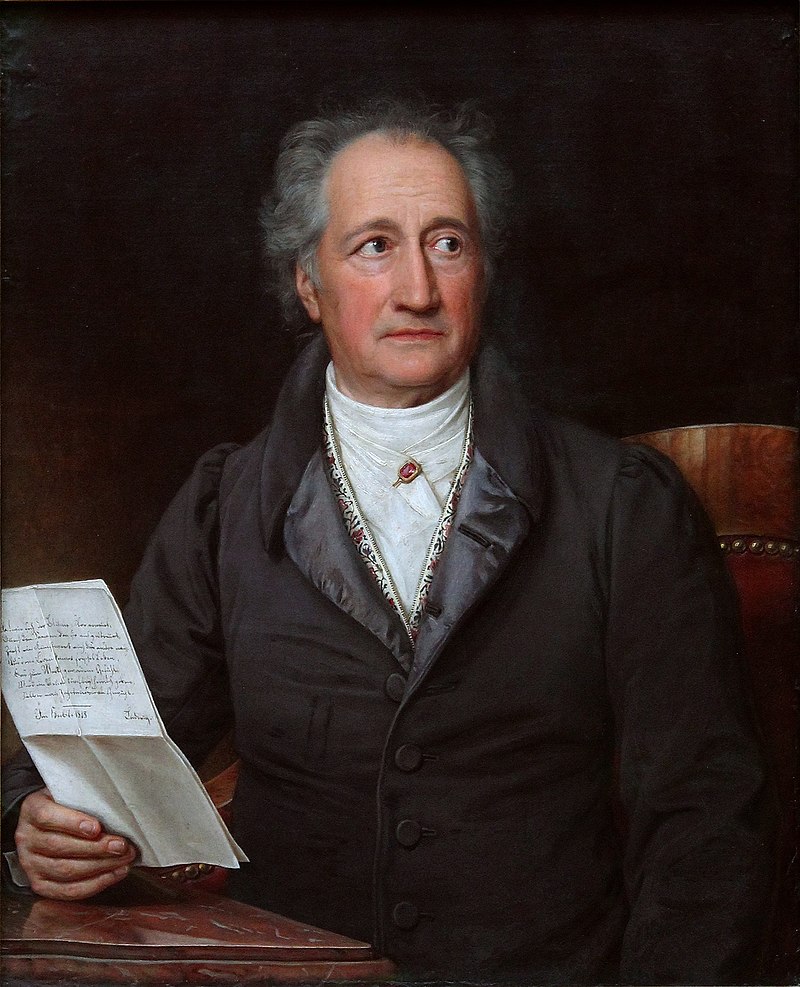
Johann Wolfgang von Goethe was born on August 28, 1749, in Frankfurt, which was then part of the Holy Roman Empire. From that day forward, the world had to reckon with his words. Goethe didn’t just write literature; he reshaped it. By the time he died in 1832, he had redefined German culture, left his mark on science, and inspired generations of thinkers and artists. His journey began in a wealthy middle-class household on Großer Hirschgraben, where young Johann devoured books and languages, loved the theater, and marveled at the puppet shows staged by French soldiers.
A Life of Passion and Precision
Goethe was a polymath. Poet. Novelist. Playwright. Scientist. Statesman. Philosopher. His genius was restless. He studied law in Leipzig and Strasbourg, but his heart always belonged to the creative spirit. He fell in love easily and often—most notably with Anna Katharina Schönkopf and later Friederike Brion—each affair leaving echoes in his writing.
In 1774, Goethe published The Sorrows of Young Werther, a novel so intense and emotionally raw that it ignited the Romantic movement. It became an instant sensation—and, tragically, sparked a spate of copycat suicides. Goethe had unleashed a cultural storm, one that would define an era.
The Weimar Years: Genius Goes to Work
Goethe’s fame brought him to the court of Duke Karl August in Weimar. There, he became a statesman, helped reform the local university, oversaw mines, and ran the court theater. For a decade, he served in administrative roles, but he never stopped writing. Götz von Berlichingen, Egmont, Iphigenia in Tauris, and Torquato Tasso flowed from his pen.
In 1794, he formed a legendary friendship with Friedrich Schiller. The two giants of German literature challenged and elevated each other, building the intellectual powerhouse known as Weimar Classicism.
The Faustian Legacy
Goethe’s masterpiece, Faust, took him sixty years to complete. The first part was published in 1808, and then Part II appeared posthumously in 1832.
Even today, Faust towers over European literature like a cathedral of thought. It’s been compared to Paradise Lost and The Divine Comedy—and rightfully so.
A Final Illumination
Goethe died in Weimar on March 22, 1832. His last recorded words? “More light.” Whether he meant sunlight or enlightenment is a matter of debate. What’s certain is that his work brought both.