
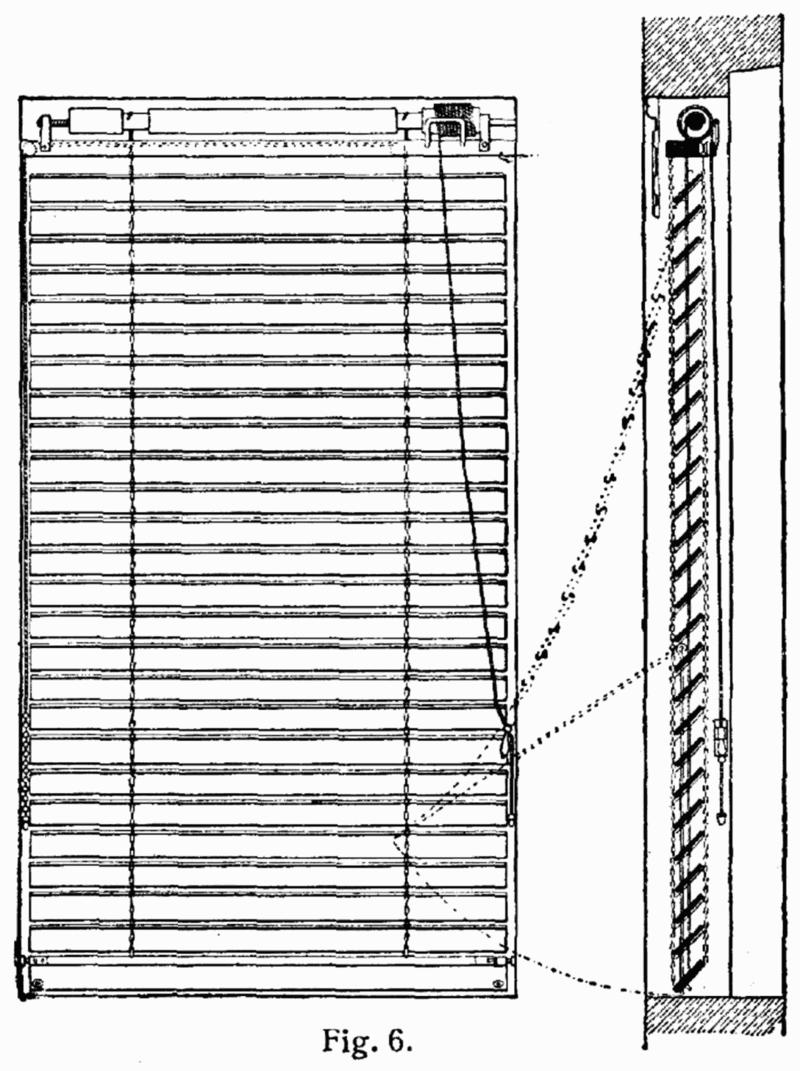
John Hampson of New Orleans, Louisiana, was granted U.S. Patent No. 2,223 on August 21, 1841, for his innovative improvement to Venetian blinds. This patent represented a significant milestone in the evolution of window treatments, transforming a previously functional yet flawed design into a more practical and durable solution for both homes and vehicles.
The Problem That Needed Solving
Before Hampson’s invention, Venetian blinds had a major flaw: the slats would rattle, create excessive noise, and move freely, making them unsuitable for use in vehicles that moved, such as carriages and railroad cars. The slats were unable to hold their position without additional catches or stops, which limited their effectiveness as window treatments. This issue was particularly problematic as the United States’ transportation network expanded in the early 19th century.
Hampson’s Ingenious Solution
Hampson’s patent described a clever mechanism that addressed these issues through what he called “so arranging and adding to the ordinary movable-slat Venetian shutter or blind, to make the slats fit tight endwise.” His design incorporated a movable strip placed within a rabbeted frame, with springs positioned between the strip and frame to maintain constant pressure against the ends of the slats. The system worked by keeping the slats pressed tightly against their supports, preventing rattling while allowing them to stay in any position without requiring catches or stops. This elegant solution used what Hampson described as “comparatively small springs” to achieve maximum effectiveness.
Technical Innovation
The patent detailed three figures showing different aspects of the design. The mechanism featured a movable strip with holes for the slat pivots, springs to maintain pressure, and a plate to keep everything in place. Hampson noted that while springs were preferred, other elastic materials, such as India rubber, could also be used to achieve the same effect.
Remarkably forward-thinking, Hampson designed his system to be adaptable, stating he didn’t confine himself to any particular shape or number of springs, or specific materials or strip configurations. This flexibility allowed manufacturers to adapt the design to various applications and requirements.
Historical Context
By 1841, Venetian blinds had become a fixture in American architecture, having arrived in the United States in the 18th century, with one of the earliest installations recorded at St. Peter’s Church in Philadelphia in 1761. However, Hampson’s patent represented the first significant American improvement to the basic Venetian blind concept.
Today, while materials and manufacturing methods have evolved dramatically, the fundamental principle of Hampson’s 1841 patent—using controlled pressure to maintain slat position—remains integral to modern Venetian blind design. His contribution represents a perfect example of American ingenuity solving practical problems through simple yet effective mechanical innovation.