
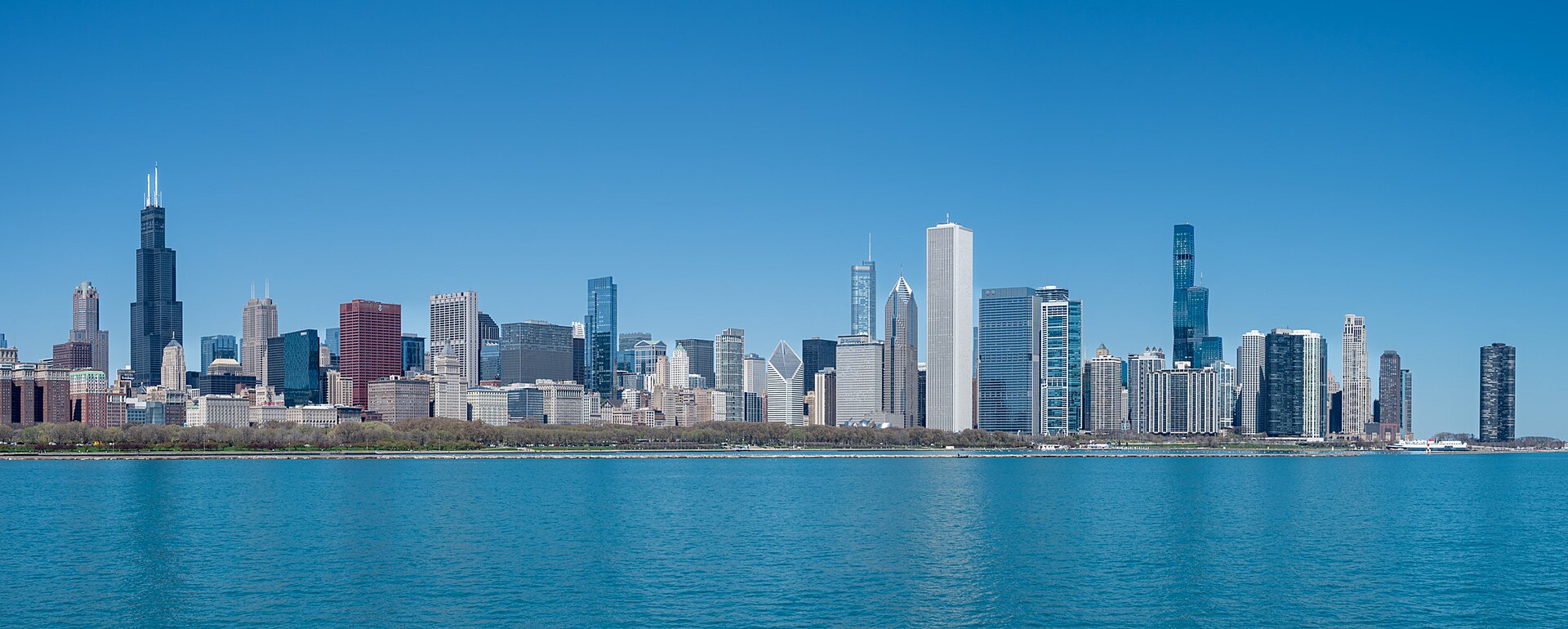
It is hard to imagine Chicago, one of the busiest and most populous cities in the United States, ever being anything but what it is today. Chicago is a massive transportation hub, home to a significant metropolitan economy, and an extremely popular destination for visitors. However, it wasn’t until August 10, 1833—fifty years after its initial settlement—that the area held an election for its board of trustees, formally marking its incorporation as a town.
Chicago is situated in northern Illinois, along the shores of Lake Michigan, the fifth-largest freshwater lake in the world. Several Native American tribes, including the Miami and the Potawatomi, originally inhabited the area. The first permanent settlement was established by a French-African trader named Jean Baptiste Point du Sable, who recognized the strategic importance of the location and its potential as a prominent settlement. Baptiste, now known as the “Founder of Chicago,” established this settlement in early 1779.
The growth of Chicago was remarkable. When it was initially incorporated as a town in 1833, its population was around 300 people. Within just five years, the population surged to over 6,000. Chicago’s economy flourished rapidly, largely due to its strategic location, attracting settlers from across the United States and beyond. In 1837, Chicago was officially incorporated as a city, allowing local authorities to enact ordinances that supported the rapid population growth and expansion.
Today, Chicago is a vast city and a major metropolitan area in the United States. Its current population is estimated at 2.7 million people, making it the third-largest city in the country by population. The tiny town of 300 residents, which once attracted people due to its advantageous location and opportunities, still holds true today—many continue to seek out Chicago for its opportunities and influence.