
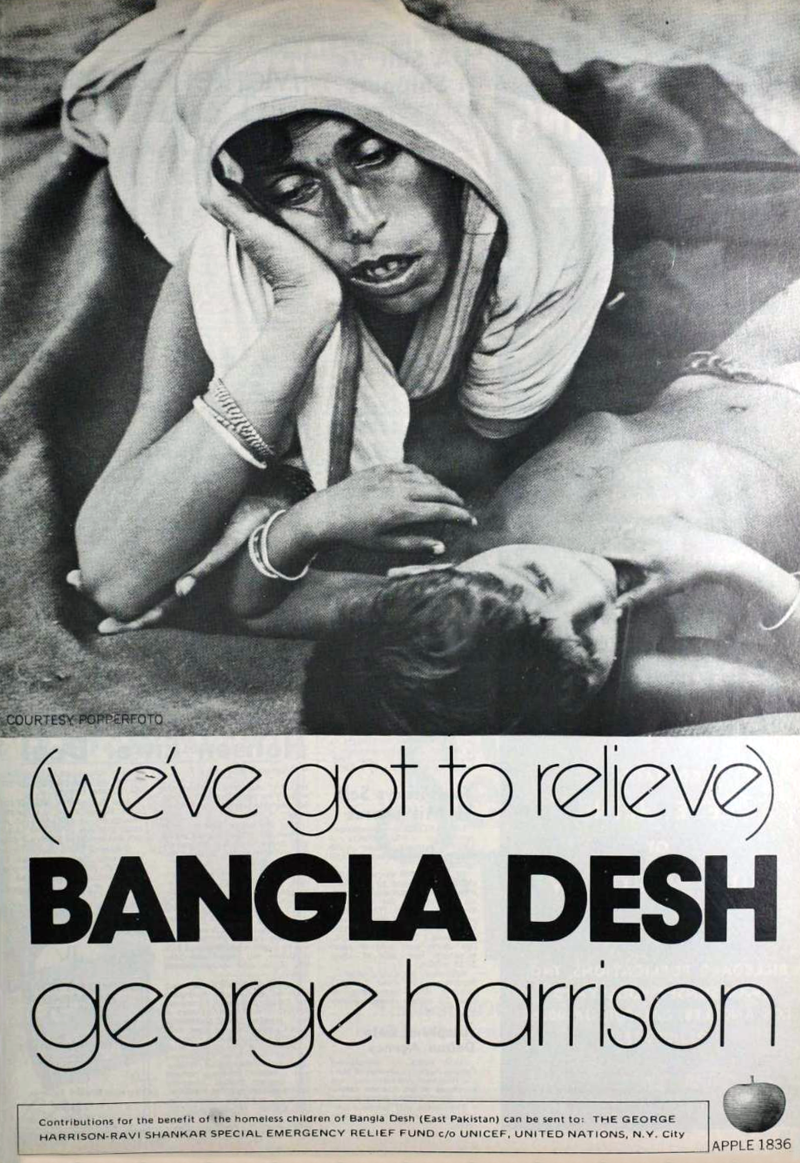
On August 1, 1971, a significant event in music and humanitarianism took place at Madison Square Garden: the Concert for Bangladesh. Indian sitar maestro Ravi Shankar reached out to his friend George Harrison because he was deeply concerned about the humanitarian crisis in East Pakistan, now known as Bangladesh. Millions of refugees were fleeing to India due to civil war, famine, and floods. Shankar wanted to make a difference, and he believed that Harrison’s star power could help make that happen.
Harrison didn’t hesitate. In a matter of weeks, he turned Shankar’s idea into a historic event.
Two shows. One day. Over 40,000 fans packed into the Garden.
The lineup? A dream team of rock legends:
- Bob Dylan made a rare appearance.
- Eric Clapton showed up, battling heroin withdrawal.
- Ringo Starr, Harrison’s Beatles bandmate, joined in.
- Billy Preston, Leon Russell, and members of Badfinger added their magic.
Each act played with urgency and soul. Dylan’s return to live performance was a headline-grabber. Harrison’s “Bangla Desh” was raw and haunting. Shankar opened with a classical set that stunned the rock crowd into silence.
But this event wasn’t just about the music.
- The concert raised over $250,000 that day—an unprecedented amount for the time.
- It marked the first major rock concert for a humanitarian cause.
- Profits from the subsequent album and film release went to UNICEF.
In Harrison’s words, “The concert was Ravi Shankar’s idea… after half an hour, he talked me into being on the show.”
The Concert for Bangladesh had a significant impact and established a model for Live Aid and all subsequent benefit concerts. It demonstrated that rock music could be a powerful force for real-world change. Additionally, it inspired the George Harrison Fund for UNICEF, which continues to support children around the world to this day. Although the event faced some challenges—such as logistical issues and bureaucratic delays that held up funds from reaching Bangladesh for several months—its lasting influence remains undeniable.
On August 1, 1971, the world saw what could happen when artists united with purpose. They didn’t just raise money. They raised awareness. They proved music could matter—loudly, beautifully, urgently.