
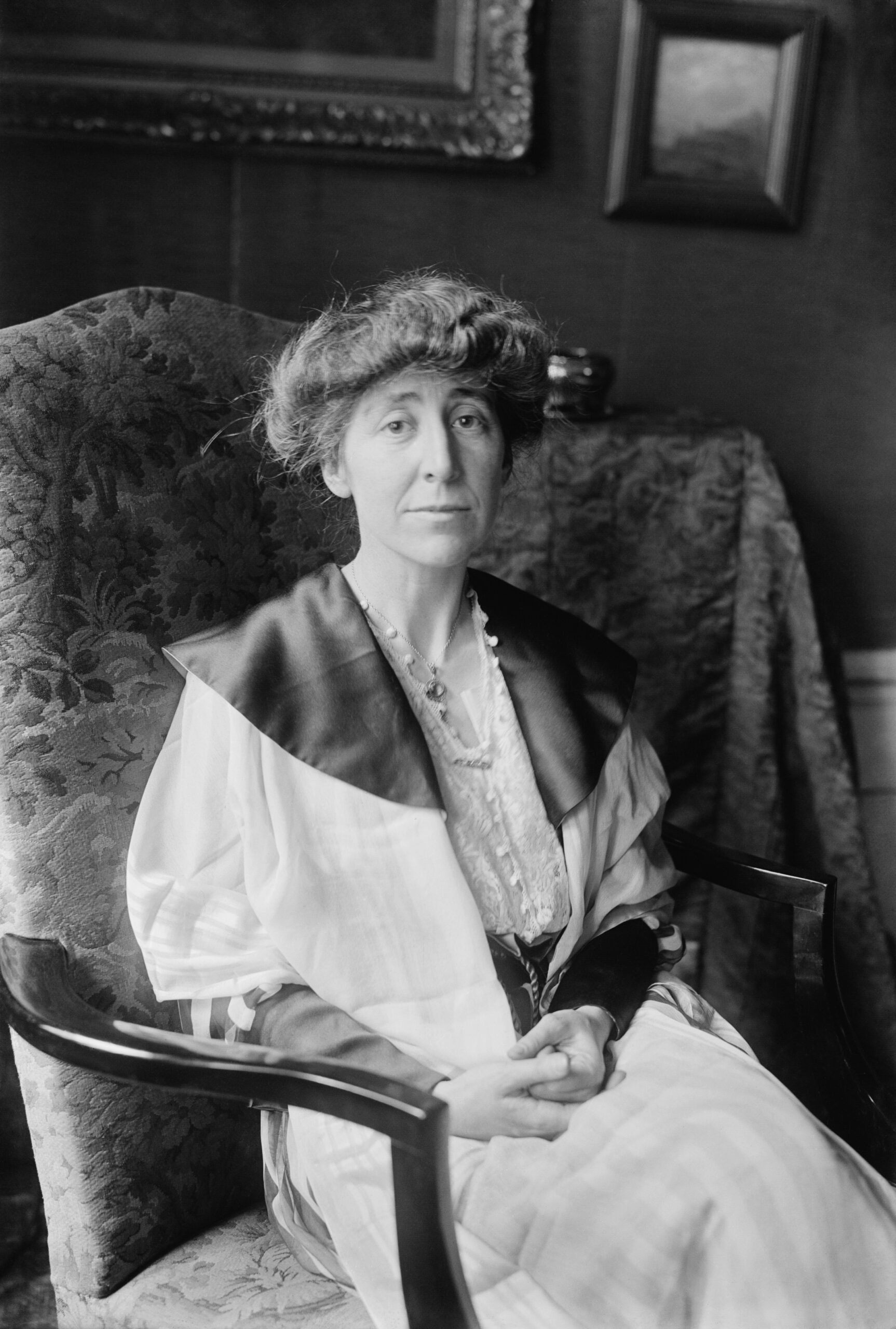
On this day in history, a significant milestone in the struggle for women’s equality and political representation was achieved: Jeannette Rankin became the first woman elected to the United States Congress. She was elected as a member of the House of Representatives from Montana on November 7, 1916.
A Champion of Women’s Rights
Jeannette Rankin was born in 1880 in Missoula, Montana. As the oldest of six children, she worked diligently alongside her parents to maintain the family ranch. She observed that, despite many women in her community working as hard as men on the frontier, they did not have an equal voice. This realization sparked her desire to advocate for women’s rights from a young age.
She graduated from the University of Montana in 1902 with a degree in Biology. However, upon graduation, she discovered her true passion lay not in science, but in advocating for women’s rights in the public arena. She joined the suffrage movement and began working as a lobbyist and social worker.
A Leap into Politics
Her career in activism flourished over the next decade. In 1911, she made history by becoming the first woman to officially testify before a state legislature in Montana. By 1914, Jeannette had taken on the role of legislative secretary for the National American Women’s Suffrage Association. She emerged as a leader of the suffrage movement in her home state of Montana, playing a crucial role in helping Montana become the 10th state in the United States to grant women the right to vote.
In 1916, she achieved another significant milestone by running for Montana’s House seat and winning, becoming the first woman elected to Congress.
Symbol of Progress and Peace
After being elected to Congress, Rankin became known for her strong stance on peace. She gained public attention for her opposition to war and was the only member of Congress to vote against the United States’ entry into both World War I and World War II, which made her unpopular with many. However, after leaving Congress, she dedicated many years to advocating for pacifist causes and remained a prominent peace activist.
Jeannette Rankin’s contributions to social reform and politics established essential groundwork for women in government, and her dedication to pacifism has made her a lasting symbol of both progress and peace.