
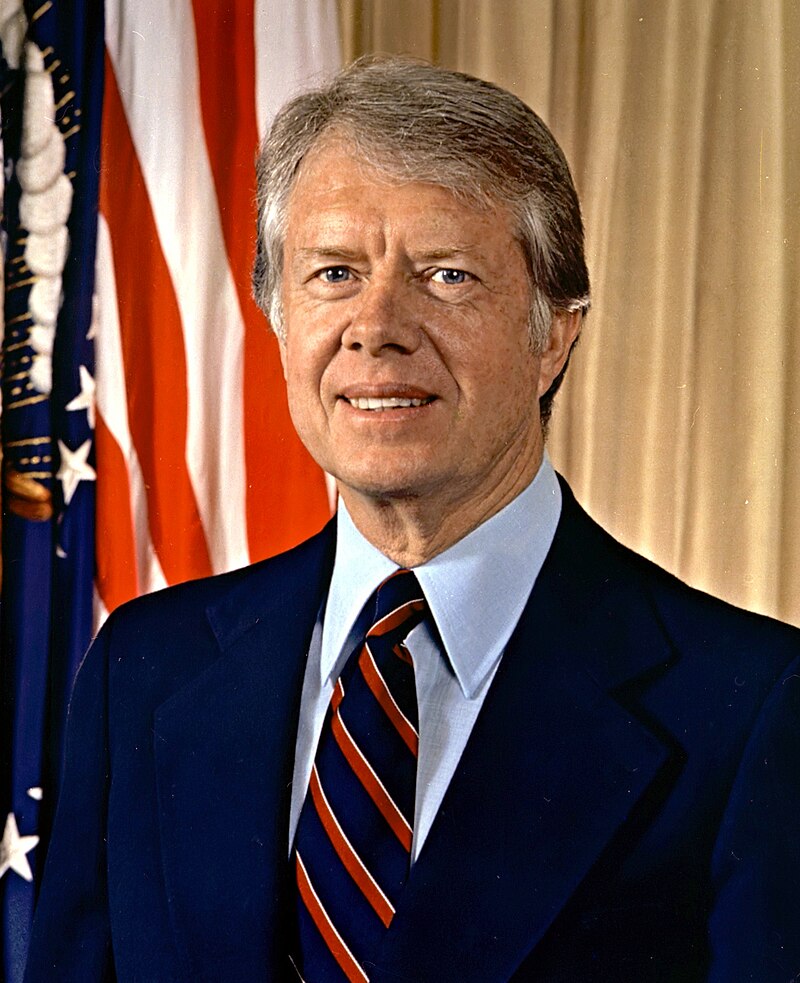
August 4, 1977, is a significant date in history as it marked a transformation in the United States government’s approach to energy. On this day, President Jimmy Carter established the Department of Energy (DOE), a cabinet-level agency created to consolidate the various energy programs that were previously scattered and often disorganized across the federal government.
America was experiencing a severe energy crisis. A harsh winter had depleted natural gas reserves, leading to the shutdown of schools and factories. The Middle East, which holds the majority of the world’s oil, was on the brink of instability. Iran—one of America’s leading oil suppliers—was descending into chaos. Islamic fundamentalism was gaining ground, and the Shah was on the verge of falling from power.
Energy wasn’t just about fuel anymore. It was about national security.
Before the establishment of the Department of Energy (DOE), over 30 different agencies were involved in managing the United States’ energy sector. This fragmentation led to a lack of a cohesive strategy. Recognizing the potential risks, President Carter, who had a background in engineering, advocated for a centralized authority. Congress passed the Department of Energy Organization Act, which was then sent to Carter for approval. On August 4, 1977, he signed the act into law, and by October 1 of the same year, the DOE became operational.
Its Mission?
- Ensure America’s energy security.
- Promote energy efficiency and innovation.
- Manage the nation’s nuclear infrastructure.
- Advance scientific research through national laboratories.
The DOE became responsible for overseeing fossil fuels and managing atomic weapons. It took nuclear policy from the former Energy Research and Development Administration (ERDA), inheriting various labs, programs, and responsibilities.
It had a rocky start, marked by internal power struggles. Funding fights. And critics who questioned whether one agency could handle it all. But Carter’s move was visionary. He understood the world was changing. Energy was no longer a local concern. It was global, volatile, and deeply political. The DOE was built to adapt and respond. Decades later, his decision still matters.
Today, the Department of Energy leads clean energy innovation, responds to cyber threats on the grid, and invests in technologies from fusion power to quantum computing. It drives climate strategy and scientific advancement. But its birth began with a pen and a president who believed America needed to think bigger.