
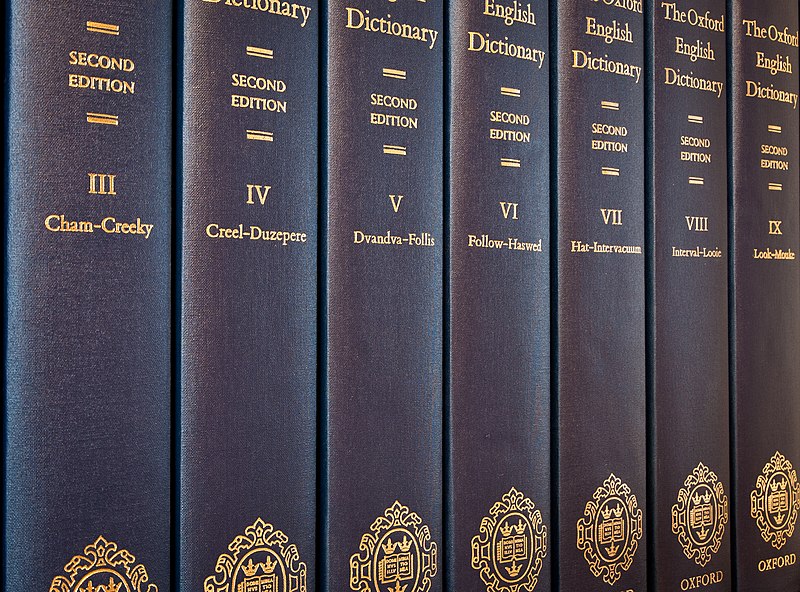
The Oxford English Dictionary (OED) was established on February 1, 1884, marking a significant shift in our understanding of English. Its creation represented a monumental effort, combining scholarship, ambition, and perseverance.
The Birth of a Dictionary
In 1857, the Philological Society of London proposed the creation of a comprehensive dictionary of the English language. This ambitious project aimed to document every English word, tracing its origins, evolution, and usage over time. To accomplish this, thousands of contributors were needed to search through books, journals, and letters for examples of words in context, promoting collaboration among various entities.
The Challenges
- Slow progress: Early editors underestimated the size of the project. The original timeline projected completion in 10 years, but it took nearly 70 years to publish the entire dictionary.
- Sheer scale: The team initially estimated the work would produce 6,400 pages. The finished dictionary spanned over 16,000 pages in 10 volumes.
- Methodical madness: Each entry required meticulous research and cross-referencing. Even with advances in printing technology, the task was staggering.
The First Installment
- On February 1, 1884, the first part of the dictionary, A to Ant, was published. This was just a fraction of the work.
- The release excited scholars and language enthusiasts, hinting at the vast intellectual treasure yet to be discovered.
The OED continuously expands, regularly adding new words, meanings, and usages to reflect the ever-evolving English language. This dictionary remains an essential resource for writers, researchers, and anyone interested in words.
Fun Facts:
- Crowdsourcing pioneer: The OED’s editors relied on volunteer contributors—an early form of crowdsourcing. They received over six million quotations for word entries.
- Unusual contributors: Dr. W.C. Minor, one of the most prolific volunteers, submitted thousands of quotations while confined in an asylum. His story inspired books and a film.